Tetsu Kasuya's Neo Brew Method: The 2026 Multi-Pour V60 Recipe
Tetsu Kasuya's 2026 Neo Brew method: an extra-coarse, high-temperature V60 recipe with ten small pours, built for sweetness and body. The recipe and how it works.
In 2026, ten years after his 4:6 method, Tetsu Kasuya released a new pour-over recipe he calls the Neo Brew, or multi-pour method. It takes the same 20 g of coffee and 300 g of water, but brews them a different way: hotter water, an extra-coarse grind, and ten small pours that build a thick, sweet cup. This guide covers the recipe, why it works, and how it compares to the 4:6 method. For the timed steps, use the Neo Brew recipe.
Who made it, and why
Tetsu Kasuya won the 2016 World Brewers Cup with the 4:6 method, and the Neo Brew is his 2026 follow-up, shared to mark ten years since that win. Where the recent trend favors short brews and small pours, the Neo Brew goes the other way, using long, repeated water contact to pull sweetness and body out of light roasts. Kasuya describes the idea as additive: build up the flavors you want rather than trim faults out of the cup.
The recipe
The Neo Brew keeps a 1:15 ratio and a 300 g batch.
- Coffee: 20 g, light roast recommended
- Water: 300 g, 95 to 96°C
- Grind: extra coarse, around 40 to 45 clicks on a Comandante C40
- Dripper: Hario V60 NEO (a standard V60 also works)
Then you pour ten times, 30 g each, every 15 seconds, in a quick and even stream that does not pool in the cone. The cadence looks like this:
| Time | Pour to |
|---|---|
| 0:00 | 30 g |
| 0:15 | 60 g |
| 0:30 | 90 g |
| 0:45 | 120 g |
| 1:00 | 150 g |
| 1:15 | 180 g |
| 1:30 | 210 g |
| 1:45 | 240 g |
| 2:00 | 270 g |
| 2:15 | 300 g |
The bed finishes draining around 3:30.
Why the Neo Brew works
Three choices do the work, and they balance each other.
- Extra-coarse grind. Coarse coffee extracts slowly and resists over-extraction, so the cup stays clean and avoids bitterness even with a lot of water contact.
- Hot water, 95 to 96°C. The high temperature offsets the coarse grind. At a lower temperature, extra-coarse coffee tends to brew weak and sour. The heat keeps extraction moving so the cup still tastes full.
- Ten small pours. Each pour adds fresh, hot water and a little agitation, which keeps the slurry active and builds extraction in steady steps. More pours means more of that, which is where the body and sweetness come from.
Pour structure is still the dial, the same idea behind the 4:6 method. The Neo Brew turns the grind and temperature in the opposite direction to chase a heavier, sweeter cup. For the mechanics underneath, see coffee extraction and measuring extraction yield.
The Hario V60 NEO
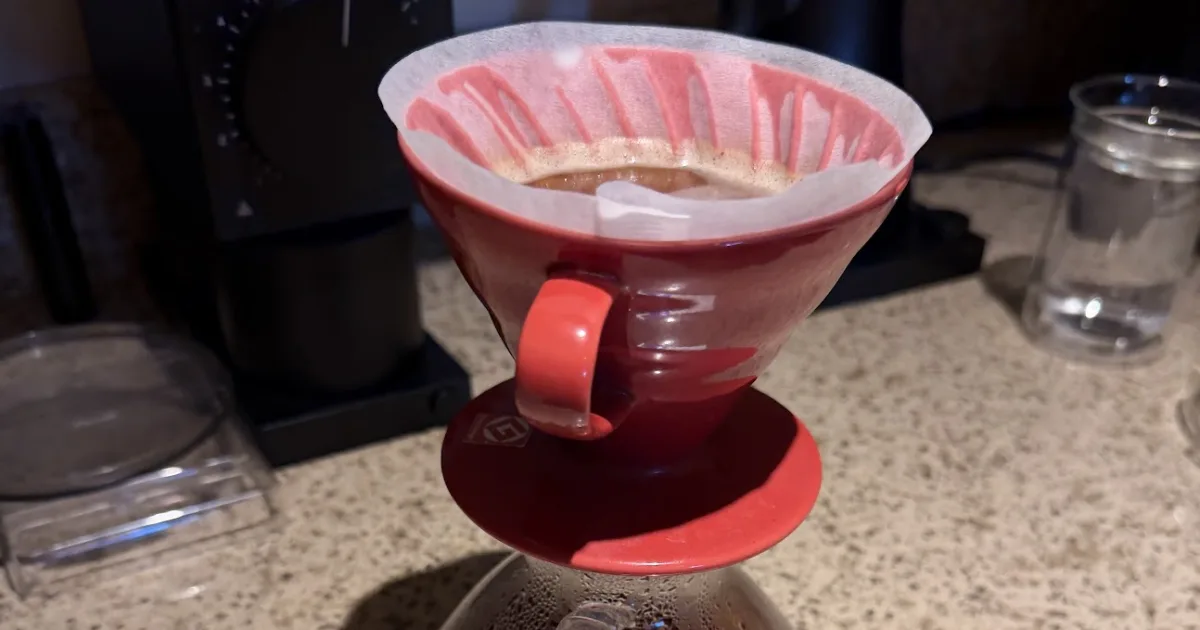
Kasuya recommends the Hario V60 NEO for this recipe. Hario gives it 72 ribs that converge to 9 near the base, which keeps the paper in contact with the cone and channels water down the walls. The result is a faster, cleaner flow that suits a recipe built on many small pours. A standard V60 still works, and you can brew the Neo Brew on one without trouble.
Neo Brew vs the 4:6 method
Both recipes are Kasuya’s, both use 20 g and 300 g at a 1:15 ratio, and both use pour structure to shape the cup. They aim at different results.
| 4:6 method | Neo Brew | |
|---|---|---|
| Grind | coarse | extra coarse |
| Water temp | ~92°C | 95 to 96°C |
| Pours | 5 | 10 |
| Built for | balance, clarity, easy adjustment | body, sweetness, texture |
| Best for | learning and dialing in | a thick, sweet light roast |
If you are new to pour-over, start with the 4:6 method, because its two dials are easy to learn. Reach for the Neo Brew when you have a light roast and want a rounder, sweeter cup.
When to use it
The Neo Brew is at its best with light, sweet-leaning single origins, the kind of coffee where you want body and sweetness without added bitterness. It is a weaker fit for dark roasts, which already brew heavy and can turn ashy under ten hot pours. It also asks for patience: ten timed pours is more hands-on than a five-pour 4:6 or a single continuous pour.
Troubleshooting
| What you taste | Likely cause | First adjustment |
|---|---|---|
| Weak, sour, thin | Under-extracted, grind too coarse for your gear | Grind a little finer, or keep the water near 96°C |
| Bitter, dry | Over-extracted, water too hot or pours too slow | Pour a touch faster, or drop the temperature slightly |
| Thin body | Not enough extraction | Keep the pours even and on time, and check the grind is not too coarse |
| Stalled, slow drawdown | Too many fines or a clogged bed | Grind coarser and pour gently to keep the bed flat |
Change one thing at a time. Grind size and brew temperature cover the two biggest levers here.
Track it in BeanBench
The Neo Brew has more moving parts than 4:6, so a record helps. In BeanBench you can log the dose, grind, temperature, each of the ten pours, and the drawdown, then your tasting notes and the next change. Brew it next to a 4:6 of the same coffee and compare, and you will see how much the grind and temperature shift the cup.
For the recipe it grew out of, read the 4:6 method, explained, or browse the full recipe list.
Frequently asked questions
What is Tetsu Kasuya's Neo Brew method?
A pour-over recipe Kasuya shared in 2026, ten years after his 4:6 method. It brews 20 g of coffee with 300 g of water at 95 to 96°C, using an extra-coarse grind and ten small 30 g pours. It is built to make a thick, sweet, low-bitterness cup, especially from light roasts.
What is the Neo Brew recipe?
20 g of coffee and 300 g of water at 95 to 96°C, a 1:15 ratio, ground extra coarse (around 40 to 45 clicks on a Comandante C40). Pour ten times, 30 g each, every 15 seconds, in a quick even stream. The brew finishes around 3:30.
How is the Neo Brew different from the 4:6 method?
Both use 20 g to 300 g at a 1:15 ratio. The 4:6 method uses a coarse grind, water around 92°C, and five pours, and it is built for balance and easy adjustment. The Neo Brew uses an extra-coarse grind, hotter water, and ten pours, and it is built for body and sweetness.
What grind size does the Neo Brew use?
Extra coarse, around 40 to 45 clicks on a Comandante C40, coarser than most V60 recipes. The hot water and many pours make up for the coarse grind, so the cup still tastes full.
What dripper is best for the Neo Brew?
Kasuya recommends the Hario V60 NEO, whose rib design gives a faster, cleaner flow that suits many small pours. A standard V60 also works.
Is the Neo Brew better than the 4:6 method?
Neither is better in general. The 4:6 method is easier to learn and adjust, which makes it a better starting point. The Neo Brew is more hands-on and aims for a heavier, sweeter cup. Try both on the same coffee and see which you prefer.
What coffee works best with the Neo Brew?
Light to medium, sweet-leaning single origins. The recipe is designed to pull body and sweetness from lighter roasts. Dark roasts can turn heavy or ashy under ten hot pours.