
What Is Wush Wush Coffee? A Rare Ethiopian Variety With an Uncertain Identity
What Wush Wush coffee is, the Ethiopian place it is named for, why it is missing from the variety catalog, what it tastes like, and how much of that comes from the plant.
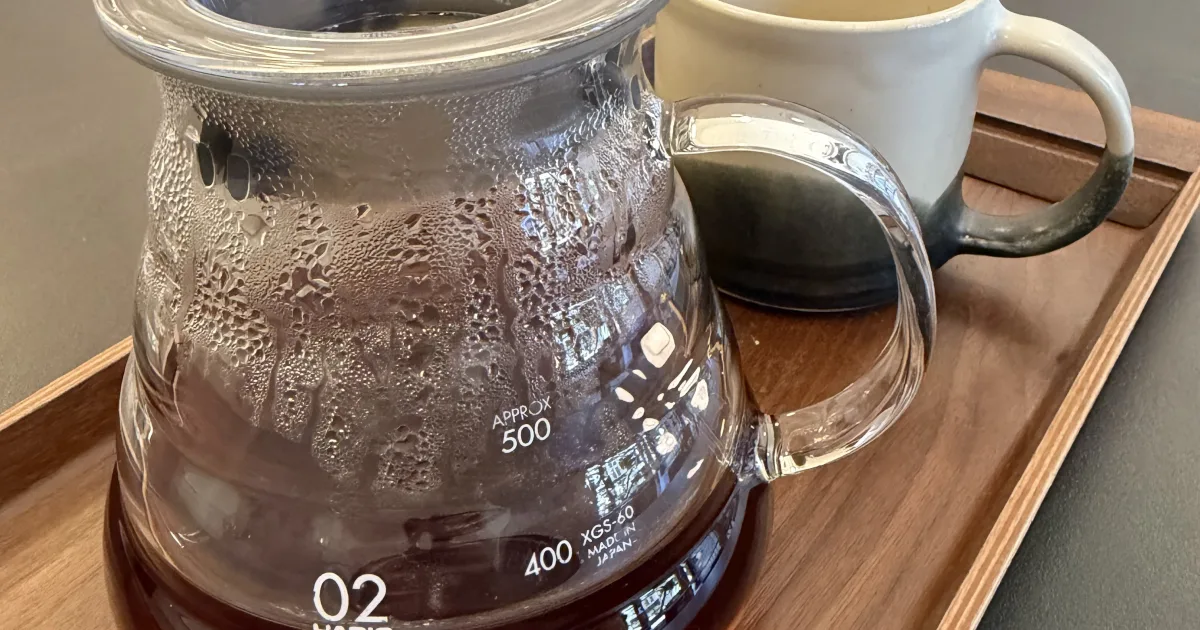
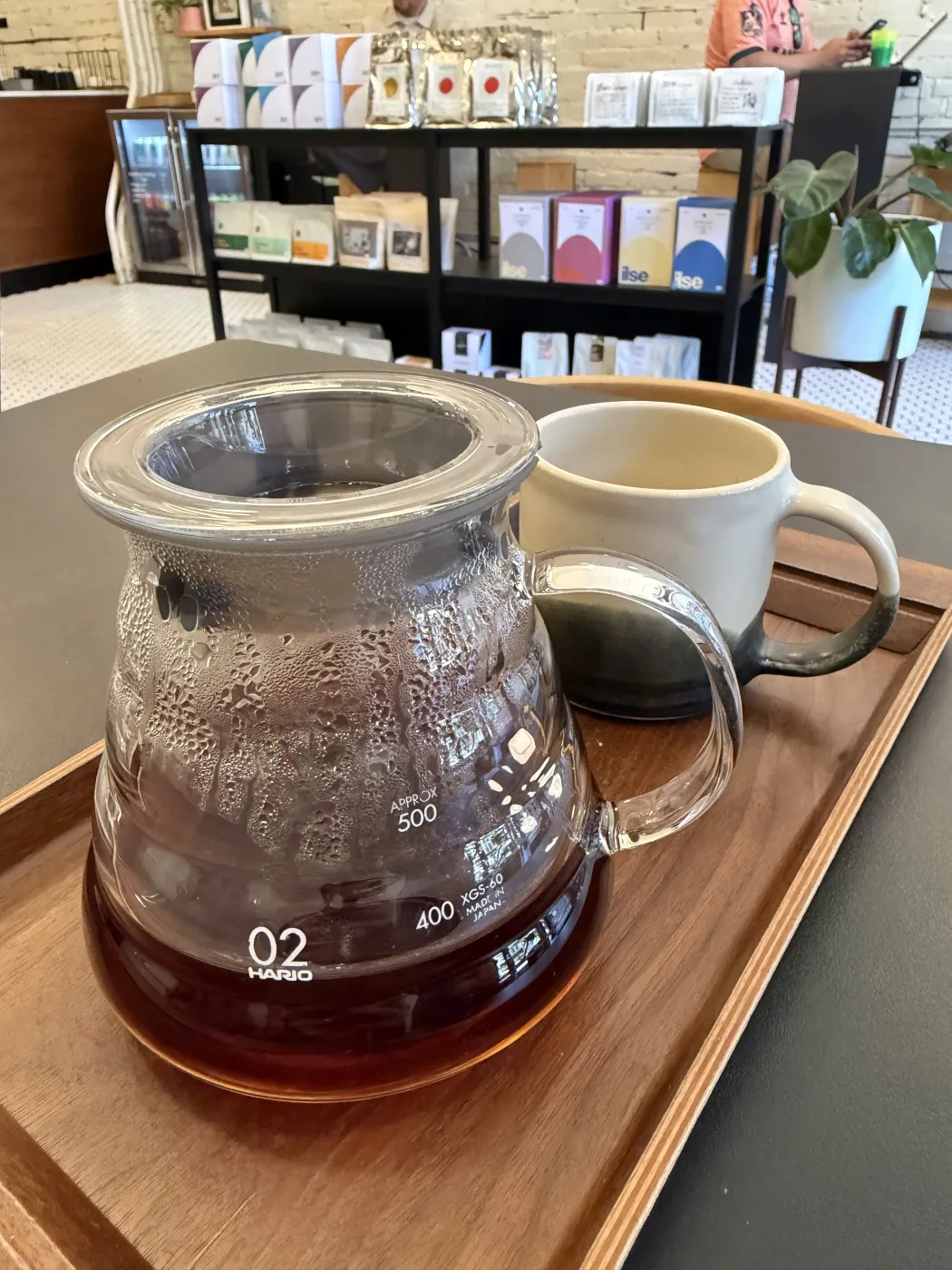
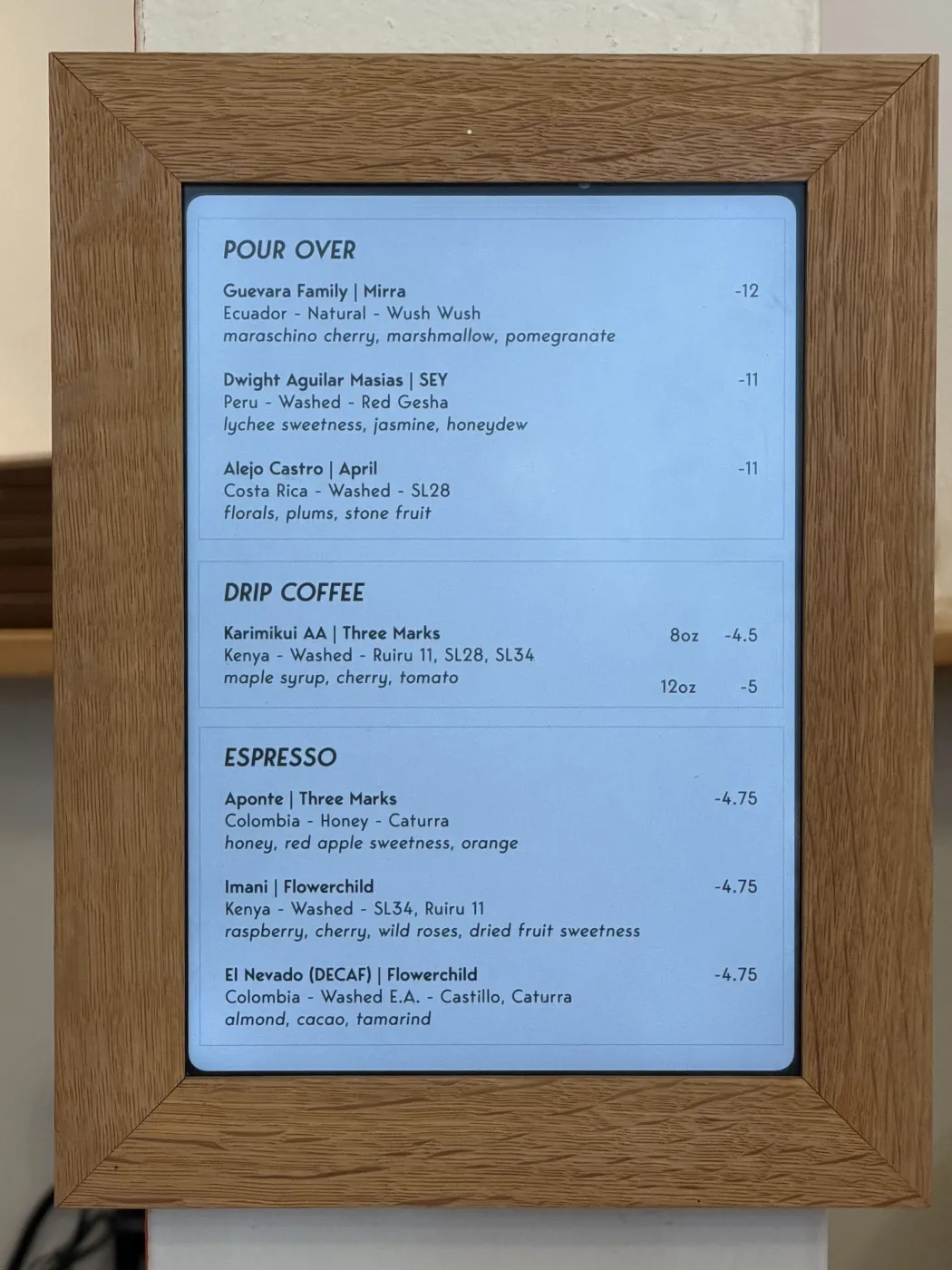
I ordered the Wush Wush at Homage in Ballard mostly because I had never had one. The board listed a natural from the Guevara Family at Finca Sacapo in Loja, Ecuador, roasted by Mirra, with notes of maraschino cherry, marshmallow, and pomegranate. The cup was clean and deeply sweet, and the red fruit arrived exactly as advertised. Then I went looking for what Wush Wush actually is, and the answer got harder the longer I looked.
This guide covers what the name refers to, the Ethiopian place behind it, why the coffee is missing from the main variety catalog, how it reached South America, what it tastes like, and how much of that flavor can fairly be credited to the plant.
What Wush Wush is
Wush Wush is the trade name for Ethiopian-derived Arabica planting material, meaning the seeds and seedlings that farms propagate from, associated with Wushwush, a town in southwestern Ethiopia. In commerce it is treated as a variety, and that shorthand is fine for ordering a coffee. The precision behind the label is where it gets interesting.
The clean way to say it: Wush Wush is a name applied to prized Ethiopian-origin seed stock, most of which now grows in Colombia and Ecuador. Whether every tree carrying that name shares one lineage has never been published.
The place it is named for
Wushwush is a town in Ginbo woreda, in the Keffa Zone of what is now South West Ethiopia Peoples’ Region. Ginbo surrounds the zonal capital of Bonga without including it, so “near Bonga” is accurate. Older sources place it in SNNPR, which was correct before the region was reorganized in 2021.
Here is the detail that surprised me. Inside Ethiopia, Wushwush is known mainly for tea. There is a large tea plantation there, and the name carries that association domestically far more than a coffee one. The coffee name borrows a place name from an area near the forests where Arabica evolved, which is a useful reminder that a variety name is often a geography label first.
Southwest Ethiopia’s montane forests are the center of origin and diversity for Coffea arabica. Cultivated Arabica across the rest of the world descends from a very narrow genetic base, which is why Ethiopian seed is so attractive to producers looking for something that tastes unlike Caturra or Castillo.
Variety, cultivar, or landrace
These words get used interchangeably on bags, and the distinction matters here.
A cultivar is a cultivated line that is reasonably stable and recognizable from one generation to the next. A landrace is a locally adapted population shaped by farmer selection and environment, which usually keeps more variation inside it. World Coffee Research uses an Ethiopian Landrace category and describes those varieties as “generally associated with very high cup quality and lower yields.”
Ethiopian coffee naming compounds the problem. A name can describe a place, a local usage, a plant’s appearance, or a batch of seed someone shared. WCR’s own Geisha entry makes the point bluntly for a better-documented coffee: “The term ‘Geisha’ is often applied to other coffees that do not share the distinct genetics of Panamanian Geisha.”
Why it is missing from the variety catalog
Wush Wush does not appear in WCR’s Arabica variety catalog. That absence is easy to read as a red flag, and it is worth understanding properly before you do.
The catalog states that it “does not aim to represent an exhaustive list of all coffee varieties in existence.” It is built as a practical tool for producers, and entries generally need to be distinct, uniform, and stable. A landrace population, by definition, holds variation inside it, which makes that bar hard to clear. So the absence tells you something about documentation status and very little about whether the coffee is good.
The related gap is authentication. WCR published an open Arabica fingerprint database in 2023 covering 23 commercially common varieties with 45 genetic markers. Wush Wush is not among them, so there is no public reference profile to test a bag against.
How it reached Colombia and Ecuador
Here the record thins out to almost nothing.
Accounts circulating in the trade place Wush Wush arriving in South America in the late twentieth century, often around the 1990s, with Colombia becoming the visible center of production outside Ethiopia. Beyond that the versions conflict. A Perfect Daily Grind interview quotes a green buyer offering three separate possibilities in one answer: material adapted from research nurseries, seed brought directly from Ethiopia for research, or replanting from early Colombian farms.
I could find no primary documentation for any of these routes. No dated import record, no published institute paper, no named producer account in a primary source. The frequently repeated claim that Cenicafé added Wush Wush to a genetic bank in the 1990s appears in roaster blogs without a Cenicafé document behind it. Worth noting: a 2025 paper by Cenicafé-affiliated authors on the Ethiopian germplasm held in the Colombian Coffee Collection never uses the name at all.
Treat the migration story as trade lore that is probably directionally right and specifically undocumented.
What it tastes like
Roasters consistently report florals, red and tropical fruit, and a sweetness people reach for dessert words to describe. Lychee, papaya, watermelon candy, strawberry, cherry, pomegranate, lavender, and vanilla all show up across listings.
My cup fits that family. Mirra’s own description of this lot ran to syrupy maraschino cherry and chilled pomegranate with a creamy marshmallow character, and the cup delivered it. I rated it 4.5 and would order it again.
Those descriptors come from marketing copy spanning many countries, farms, and processing styles, which makes them a family resemblance at best. Elena Lokteva, who buys green coffee in Colombia and Ecuador for Ally, has tasted Wush Wush from four farms over five years and told Perfect Daily Grind that each had its own personality and intensity. Her conclusion: “It would be unfair to say that all Wush Wush tastes the same within their variety strains.”
How much of that comes from the variety
A cup is the output of genetics, growing environment, ripeness at harvest, processing, roast, water, and brewing. The variety is one input among several, and on a heavily processed coffee it is often not the loudest.
Mirra made this point about their own lot better than I could, calling it an astoundingly crisp and clean natural “with the processing manifesting primarily as a high degree of sweetness.” That is a roaster attributing a headline characteristic of the cup to processing while selling the variety on the label.
Jon Allen, who owns Onyx Coffee Lab and runs its coffee program, made the same point more broadly. Talking about how far processing has come, he said that with experimentation in bacteria strains and anaerobic fermentation, “we’re tasting Caturra and Bourbon and Typica coffees that you might think are Wush Wush.” He also warned that heavy processing can overshadow the delicate characteristics a rare variety is bought for.
Controlled fermentation gives producers real control over the finished flavor. A 2024 review in the International Journal of Food Science and Technology concludes that fermentation lets producers direct changes in chemical composition and modulate sensory outcomes. Plenty of Wush Wush reaching specialty shelves is natural, anaerobic, or extended-ferment, so a vivid cup may be telling you as much about the tank as the tree.
One mechanism worth correcting while we are here, because it appears in a lot of coffee writing: natural processing does not work by letting fruit sugars soak into the seed. Sucrose levels are set in the field. What post-harvest processing changes is the seed’s own metabolism, since germination begins during processing and proceeds differently depending on the method.
The experiment that would settle the variety question is a split lot: the same farm, the same harvest, the same processing, the same roast, with only the variety changing. Those comparisons are rare, which is why most claims about how a variety tastes remain observational.
Wush Wush and Gesha
The comparison comes up constantly, and it holds at the surface. Both names trace to southwestern Ethiopia, both became expensive outside it, and both are sold on floral, fruit-forward cups.
The documentation is where they separate. Gesha has decades of competition and auction history and published genetic references. It also has a cautionary result attached. A 2020 authentication study in the Journal of AOAC International fingerprinted samples submitted as specific varieties and found that of 88 samples labeled Gesha, 39% matched the Gesha reference, 24% were closely related, and 37% were genetically unrelated to it. For contrast, Marsellesa samples in the same work conformed at 82%.
That is the state of play for a variety with a reference profile. Wush Wush has no public profile to test against at all.
| Feature | Wush Wush | Gesha |
|---|---|---|
| Named for | Wushwush, Keffa Zone, Ethiopia | Gesha area, southwestern Ethiopia |
| In WCR catalog | No | Yes |
| Public genetic reference | None published | Panamanian Geisha profile exists |
| Documented arrival in the Americas | Trade accounts only, conflicting | Well documented via Panama |
| Published agronomic data | None found | Yield, rust and altitude data via WCR trials |
| Cup reputation | Florals, red and tropical fruit, candy sweetness | Florals, jasmine, stone fruit, tea-like |
What we still do not know
The questions I could not answer from public sources:
- Whether coffee sold as Wush Wush is genetically consistent from farm to farm.
- Which sensory traits survive when processing is held constant.
- How the plant performs agronomically. No published yield, rust resistance, or climate tolerance data exists, and it has never been through WCR’s multilocation variety trials, so the widely repeated low-yield claim rests on producer and roaster reports.
- Which lineages actually reached Colombia and Ecuador, and when.
- How much of the price reflects farming cost, cup quality, scarcity, and story.
None of that makes the coffee less worth drinking. It does mean the label is carrying more weight than the evidence behind it.
Track it in BeanBench
Wush Wush is a good argument for logging carefully, since you may never see the same lot twice and the variety name alone will not tell you why you liked it. Record the producer and farm, the country and region, the process and any fermentation detail, the roaster and roast date, and your own notes as the cup cools.
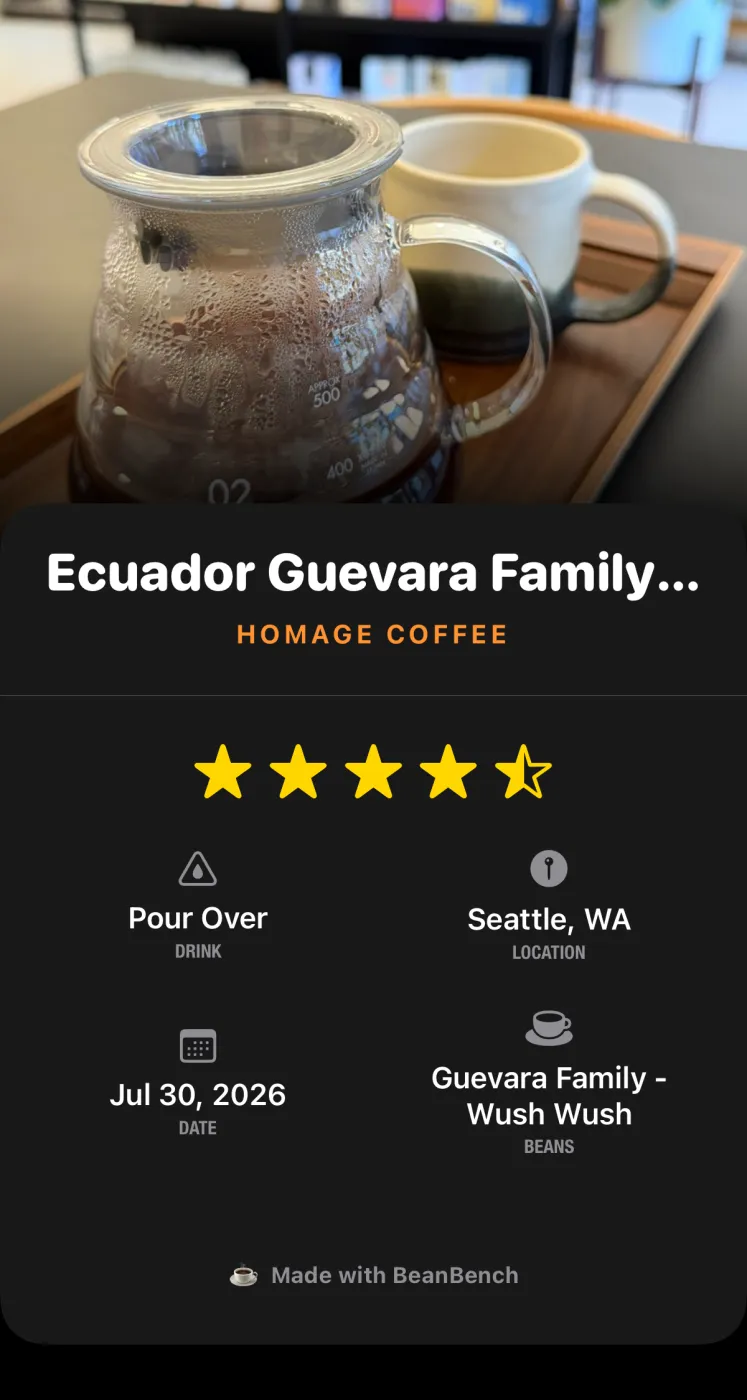
In BeanBench you can keep all of that together and compare a washed lot against a natural one later, which is the closest most of us get to running the split-lot experiment. From here, read about coffee varieties, processing methods, and Sudan Rume for another rare variety with a complicated story, or pick a recipe.
Frequently asked questions
What is Wush Wush coffee?
Wush Wush is the trade name for Ethiopian-derived Arabica planting material, meaning the seeds and seedlings that farms propagate from, associated with Wushwush, a town in the Keffa Zone of southwestern Ethiopia. Most of the Wush Wush sold in specialty coffee today is grown in Colombia and Ecuador rather than Ethiopia, and it is prized for sweet, fruit-forward cups.
Is Wush Wush a real coffee variety?
It is a real and widely traded name, and the coffees are real. What has never been published is a genetic study confirming that every tree sold under the name shares one uniform lineage. Treat the label as useful provenance information whose precision is unverified.
Why is Wush Wush not in the World Coffee Research variety catalog?
The catalog is selective by design and says it does not aim to list every coffee variety in existence. Entries generally need to be distinct, uniform, and stable, which is a bar that locally adapted landrace populations struggle to meet. Absence from the catalog reflects documentation status. It says nothing about how the coffee tastes.
Where does Wush Wush grow?
The name comes from southwestern Ethiopia, but the lots that reach most drinkers are grown in Colombia and increasingly Ecuador. The coffee I tasted for this guide came from Finca Sacapo in Loja, Ecuador.
What does Wush Wush taste like?
Roasters commonly report florals, red and tropical fruit, and pronounced candy-like sweetness. Descriptors range from lychee and papaya to cherry, pomegranate, and marshmallow. Processing shapes the cup heavily, so the same variety can taste clean and delicate or loud and fermented.
Is Wush Wush the next Gesha?
The comparison is understandable, since both names come from southwestern Ethiopia and both command high prices. Gesha has a far longer documented history in competition and auction records, and it has published genetic references that Wush Wush lacks.
Why is Wush Wush expensive?
Producers and roasters consistently report low yields, and lots tend to be small, hand-selected, and often experimentally processed. Scarcity and a strong rarity narrative also support the price. No published yield data exists to check the low-yield claim independently.