
Coffee Processing Methods Explained: Washed, Natural, Honey & Co-Ferment
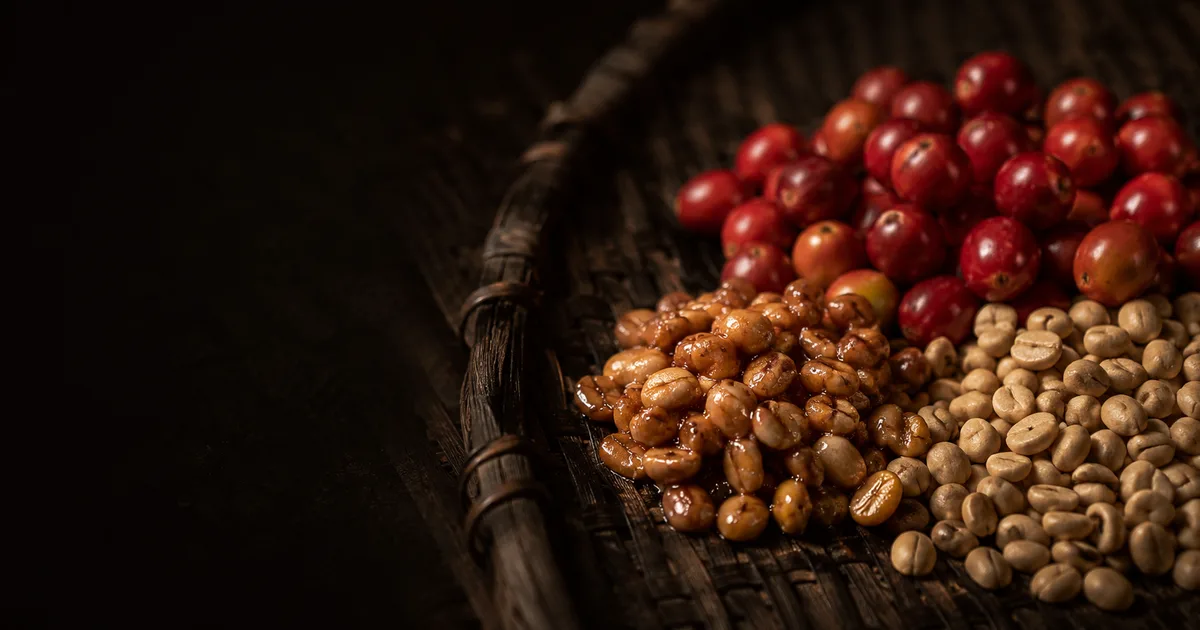
How washed, natural, honey, anaerobic, carbonic, and co-fermented processing change coffee flavor, why co-ferments are controversial, and how to brew each one.
Washed, natural, honey, anaerobic, carbonic maceration, co-ferment, thermal shock, Diamond: a specialty coffee bag can read like a mix of farming, winemaking, chemistry, and marketing. All of these are processing terms, and processing is one of the most useful clues to how a coffee will taste and how you should brew it.
It’s also one of the easiest things to over-read. A process label tells you something real about a coffee, but origin, variety, elevation, roast, freshness, and your own brewing still do a lot of the work. Treat processing as a strong hint about what you’re likely to get, not a promise.
What “processing” means
Processing is everything that happens after the cherries are picked and before the beans are roasted. Producers remove the fruit from the seed, dry the coffee down to a stable moisture level, and usually manage a fermentation step along the way. Those choices change the cup.
The three core families
Most coffee starts as one of three traditional styles, defined by how much fruit stays with the seed during drying:
- Washed: the fruit is removed before drying.
- Natural: the whole cherry dries with the fruit on.
- Honey: the skin comes off, but some sticky mucilage stays on during drying.
Washed coffee
In washed processing the fruit is removed early. The coffee is depulped, fermented just long enough to loosen the sticky mucilage, washed clean, and dried. Less fruit around the seed means the bean’s own character comes through more plainly.
Washed coffees tend to taste clean, bright, and tea-like, with crisp acidity and clear citrus or floral notes. Reach for washed coffee when you want clarity and an easy read on the origin and variety. For pour-over, washed light roasts make a great default: use your normal recipe, grind fine enough to build sweetness, and avoid under-extracting it into thin, sour lemon water.
Washed covers a wide range of practice, and the fermentation inside it can get elaborate. A triple fermented washed Guji runs three separate ferments before the coffee is ever washed, and still lands on the clean, floral side of the map.
Natural coffee
In natural processing the whole cherry dries with the fruit attached, so the seed takes on character from the fermenting fruit around it. This is one of the oldest methods and works best where the climate allows slow, even drying.
Naturals tend to taste fruitier, sweeter, and fuller-bodied: berries, tropical fruit, jam, and sometimes a winey edge. A well-made natural can be stunning; a poorly handled one can taste overripe, boozy, or muddled. For pour-over, naturals often like a gentler hand. If the cup turns muddy or boozy, make one small change at a time: grind a touch coarser, ease off agitation, or drop the water temperature a degree or two.
Honey coffee
Honey processing is the middle path. The skin is removed but some mucilage stays on the seed while it dries. The name comes from the sticky, honey-like texture of that mucilage; no honey is added, per the National Coffee Association.
Honey coffees often get labeled by color: white, yellow, red, or black. As a rough scale, that moves from less mucilage and cleaner drying (white, closer to washed) toward more mucilage and slower drying (black, heavier and sweeter, sometimes winey). The terms aren’t standardized across producers, so treat them as a hint. Honey coffees are usually sweet, rounded, and forgiving, which makes them an easy daily pour-over.
Wet-hulled coffee
Wet-hulled coffee, or giling basah, is most associated with Indonesia. The parchment is removed while the beans are still fairly moist, and they finish drying afterward. The result is typically earthy, herbal, savory, and full-bodied, with lower acidity. It’s a good pick when you want depth and weight rather than delicate florals.
Reading a process label in three layers
The terms get confusing because they describe different things. It helps to read a label in three layers:
- Fruit-removal method: washed, natural, honey, wet-hulled. How much fruit stayed with the seed.
- Fermentation control: anaerobic, carbonic maceration, yeast-inoculated, extended, thermal shock. How the producer managed oxygen, time, temperature, and microbes.
- Additive: co-ferment, infused. Whether non-coffee ingredients went into the tank.
So “anaerobic natural” is a natural-process coffee with an oxygen-limited fermentation stage, and “co-fermented with passion fruit” means something was added. They aren’t the same kind of claim. Our Decode Coffee Process tool breaks a label down along these lines and shows what it still leaves unanswered.
The fermentation boom, and what the science says
Producers have always used fermentation to break down mucilage. What changed recently is the level of control: fermentation is now used as a flavor-design tool, with producers managing oxygen, time, temperature, microbes, and sometimes added ingredients.
The research backs up the basic idea. A 2019 study in Applied and Environmental Microbiology tracked wet processing from cherry to cup and found lactic-acid bacteria driving fermentation, building metabolites like lactic acid and mannitol that feed into flavor. A 2022 study in LWT compared natural, washed, honey, anaerobic, and carbonic-maceration lots and found the method measurably shifted both bioactive and aromatic compounds, with the effect varying by origin. And research on self-induced anaerobic fermentation reported sensory scores rising by up to about 3.8 points along with more fruity, sweet notes, while also flagging that extended fermentation can favor some toxigenic fungi, a safety question producers manage with controlled time and starter cultures.
Processing changes probabilities, not guarantees. The same method on a different farm, variety, or protocol can give a very different cup, so a label like “anaerobic” sets expectations rather than promising strawberry candy.
For the microbiology behind all this, what the yeasts and bacteria actually do and what the research does and doesn’t support, see our deeper guide to coffee fermentation.
Anaerobic and carbonic maceration
Anaerobic coffee ferments in a sealed, oxygen-limited tank. As microbes consume the fruit sugars they produce acids, alcohols, and aromatic esters, which can push a coffee toward intense fruit, winey acidity, and a heady aroma. “Anaerobic” covers a huge range, though: a short anaerobic washed coffee and a long anaerobic natural taste nothing alike.
Carbonic maceration ferments whole cherries in a CO2-rich tank, a method borrowed from winemaking and popularized in coffee after Sasa Sestic used it to win the 2015 World Barista Championship. It tends to give aromatic, fruit-forward, sometimes wine-like cups, and it often carries a premium price.
Yeast inoculation, thermal shock, and “Diamond”
A few more terms you’ll meet:
- Yeast-inoculated: the producer adds a chosen yeast or bacteria to steer fermentation, much as a brewer or baker would. It can make results cleaner and more repeatable.
- Thermal shock: deliberate temperature swings during processing. The term isn’t standardized, so look for a roaster who explains what actually happened.
- “Diamond”: a proprietary family of names (Yellow, Black, Double Diamond) from the Las Lajas mill in Costa Rica, usually honey or natural processing with one or more anaerobic stages and slow drying. Read the actual notes rather than the gemstone name.
Co-fermented and infused coffees
Co-fermented (or infused) coffee is fermented with added non-coffee ingredients: fruit, spices, hops, juice, and so on. Royal Coffee draws a useful line between inoculation, where a producer adds only a microbe to guide fermentation, and co-fermentation, where a producer adds an actual food product with new sugars. The cup often tastes loudly of watermelon, coconut, cinnamon, or tropical candy.
These can be genuinely fun and approachable. They can also be divisive, and the reason is worth understanding.
Why co-ferments are controversial
The debate has a few real layers, and it’s more interesting than “purists hate fun coffee.”
Competitions are split. In 2024, the Best of Panama disqualified four infused coffees before its auction, saying they had been altered with foreign additives, and called for a separate category rather than a blanket ban. The World Barista Championship, by contrast, allows additions as long as they happen before the green-coffee stage. Two major institutions, two different lines.
There’s a flavor argument too. Critics say loud added notes can bury the origin character that specialty coffee has spent decades celebrating, while advocates call co-fermentation a natural evolution of processing that can pay farmers well. Perfect Daily Grind describes a real split between the two camps, and the field has moved toward nuance rather than a verdict.
The concern most people share is transparency. A buyer shouldn’t have to guess whether a “watermelon” note came from the coffee or from added watermelon, and undisclosed ingredients raise labeling and potential allergen questions. Demand, meanwhile, is real: co-ferments tasting obviously of fruit have spread quickly because plenty of drinkers enjoy them.
Where this lands: in everyday retail, a clearly labeled co-ferment is a legitimate, often delicious product. Most of the friction comes from two things, undisclosed additives and competitions built to reward terroir. The fix for the first is simple, which is honest labels.
For the full competition story, Cinnamongate, the 2024 rule change, and the Best of Panama disqualifications, see is infused coffee cheating?.
What processing means for your pour-over
Processing helps you pick the kind of cup you want and gives you a starting point for dialing it in:
- Washed, light roast: around 93–96°C, medium-fine, roughly 1:16–1:17. Push enough extraction for sweetness so it doesn’t taste sharp or grassy.
- Natural: similar ratio, gentler pours, less agitation. Back off temperature or grind slightly coarser if it tastes overripe or boozy.
- Honey: treat it like washed to start, then adjust by sweetness and body. Usually forgiving.
- Anaerobic or carbonic: start gentle, with low agitation and maybe a degree or two cooler if it’s very aromatic. The aromatics can take over if you over-extract.
- Co-ferment: brew for balance rather than maximum extraction. The flavor is already loud, so there’s no need to chase every last note.
A simple dial-in framework
Whatever the process, start with your normal recipe and let the cup tell you what to change:
- Sharp, sour, or thin: grind finer, brew hotter, or add a little agitation.
- Bitter, dry, or hollow: grind coarser, lower the temperature, or ease off agitation.
- Muddy fruit: grind coarser or pour more gently.
- Boozy or over-fermented: lower the temperature and reduce agitation.
- Loud or perfumey: brew cooler and gentler.
Where to start
If you’re newer to specialty coffee, a good progression is washed first (to learn clarity and origin), then honey (for sweetness and body), then natural (for fruit and texture), then an anaerobic or carbonic lot when you want something more expressive, and a co-ferment when you want an obvious, dessert-like flavor. Many people end up rotating washed and honey day to day, with naturals and experimental lots as variety.
Track it in BeanBench
The fastest way to learn your own preferences is to write them down. In BeanBench you can record each coffee’s process method and fermentation tags alongside your brew recipe, grind, temperature, and tasting notes. Over a few bags you’ll see whether you actually rate washed Ethiopians over Colombian anaerobics, or whether a pricey co-ferment holds up once the novelty wears off. From there, dial in with grind size and a recipe, and read up on coffee varieties next.
Frequently asked questions
What is coffee processing?
Processing is everything that happens to a coffee after the cherries are picked and before the beans are roasted: removing the fruit from the seed, drying the coffee, and often managing a fermentation step. It strongly shapes flavor, but it works alongside origin, variety, roast, and how you brew.
What's the difference between washed, natural, and honey coffee?
Washed coffee has the fruit removed before drying, so it tends to taste clean, bright, and tea-like. Natural coffee dries with the whole fruit on, so it tends to taste fruity, sweet, and heavier. Honey coffee leaves some sticky mucilage on during drying, landing in the middle: sweet and rounded with moderate fruit.
Does honey-processed coffee contain honey?
No. The name comes from the sticky, honey-like mucilage left on the bean during drying. No honey is added. Labels like white, yellow, red, and black honey roughly describe how much mucilage stayed on and how slowly the coffee dried.
What is anaerobic coffee, and what is carbonic maceration?
Anaerobic coffee ferments in a sealed, oxygen-limited tank, which can build intense fruity, winey, and aromatic flavors. Carbonic maceration ferments whole cherries in a CO2-rich tank, a technique borrowed from winemaking and popularized in coffee after 2015. Both are control techniques, not flavor guarantees.
What is co-fermented or infused coffee?
Co-fermented (or infused) coffee is fermented with added non-coffee ingredients such as fruit, spices, hops, or juice. That's different from inoculation, where a producer adds only a microbe (yeast or bacteria). Co-ferments often taste loudly of things like watermelon, coconut, or cinnamon.
Are infused coffees the same as flavored coffee?
Not exactly. Flavored coffee usually has oils or syrups sprayed on the roasted beans. Infused or co-fermented coffee has ingredients added during processing, before roasting. The cup can still taste obviously of fruit or spice, which is why clear labeling matters.
What is 'Diamond' process coffee?
It's not an industry standard. 'Yellow Diamond', 'Black Diamond', and 'Double Diamond' are proprietary names from the Las Lajas mill in Costa Rica, usually involving honey or natural processing with one or more anaerobic stages and slow drying. Read the roaster's actual process notes rather than the gemstone name.
Why are co-fermented coffees controversial?
Competitions split on them: Best of Panama disqualified infused coffees in 2024, while the World Barista Championship allows additions made before the green-coffee stage. Critics argue added flavors can mask a coffee's origin character; the bigger, shared concern is transparency, since buyers should know whether a fruit note came from the coffee or an added ingredient.
Which processing method is best for pour-over?
There's no single best. Washed and honey coffees make forgiving, clear daily pour-overs; naturals and anaerobics are more expressive and reward gentler brewing. Start with your normal recipe and adjust by taste rather than overhauling everything because the bag says 'anaerobic.'