
Is the Chemex Good for Specialty Coffee?
The Chemex is iconic and makes a clean, bright cup, but its thick filter and cone shape are a style choice. Here is when it is the right brewer and when it is not.
The Chemex is one of the most recognizable objects in coffee, and it makes genuinely good coffee. It also makes a specific kind of coffee: clean, bright, low in sediment, and lighter in body than most other pour-overs. Whether that is the right cup for you depends on what you want from a specialty brew, so the useful question is what the Chemex is good at.
This guide covers where the Chemex came from, what its filter and shape actually do to the cup, where it shines, where it struggles, and a simple side-by-side experiment you can run at home to decide for yourself.
The Chemex is a design object first
Peter Schlumbohm patented the Chemex in 1941. He was a German-born chemist with a doctorate from the University of Berlin and around 300 patents to his name, and the Chemex was his one lasting commercial success (Lemelson-MIT). He borrowed the form from laboratory glassware, pairing a funnel with an Erlenmeyer flask, and leaned on Bauhaus ideas about function and clean lines (Chemex). The result sits in the permanent collection of the Museum of Modern Art (MoMA).
That history is part of why people love it, and it is worth separating from how the coffee tastes. A beautiful brewer earns a place on the counter. What it does to the cup is a different question.
The filter is the real variable
The hourglass glass gets the attention, but the flavor mostly comes from the filter. Chemex says its bonded filters are 20 to 30 percent heavier than many competing papers and are made to hold back sediment, oils, and some bitterness (Chemex).
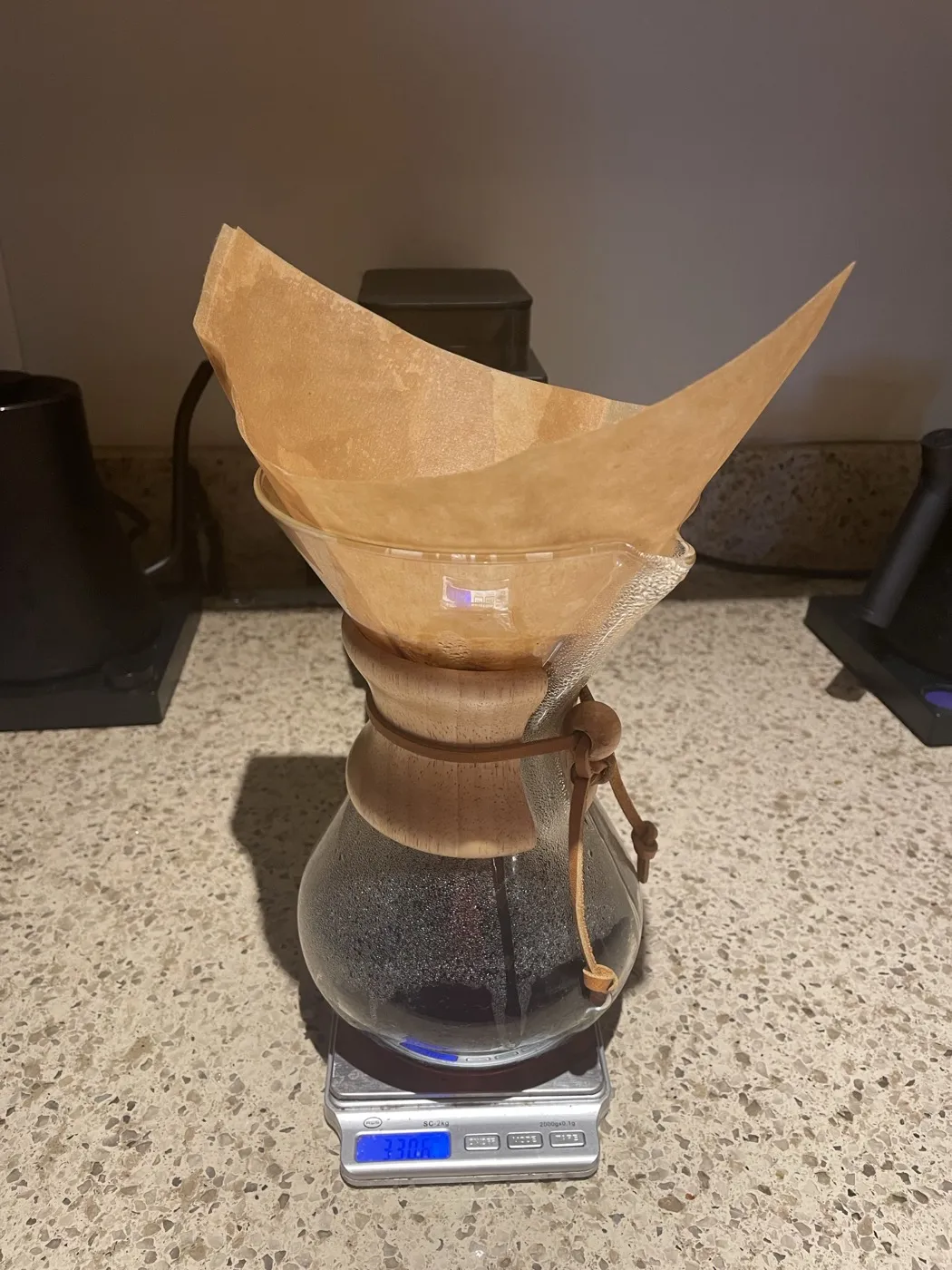
Thick paper traps more of the coffee oils and fine particles that carry body and texture. That is what gives the Chemex its clean, low-sediment character, and it is also why the cup has less body than the same coffee brewed in a V60 or a metal-filter method. The same filtration removes most of the diterpenes that can raise LDL cholesterol, which is a small point in the Chemex’s favor for daily drinkers and one we cover in is coffee good for you.
So the trade is straightforward. You gain clarity and a clean finish. You give up some body and some of the heavier aromatic weight.
What the cone shape does to flavor
Brewer shape matters on its own, separate from the filter. Research from the UC Davis Coffee Center for the SCA compared flat-bottom and conical baskets and found tasters could reliably tell the cups apart. Conical baskets leaned toward citrus, berry, and sour notes, while flat-bottom baskets leaned toward dried fruit, sweet, and floral notes (Coffee Science Foundation).
The Chemex is a cone, so its shape pushes the cup toward the bright, acidic end. Combine that with the thick filter and the Chemex signature comes into focus: clean and bright, with lower body. A great fit for washed coffees with delicate florals and citrus, and a less natural fit if you are chasing thick, syrupy sweetness.
What “good” specialty coffee means here
A brewer is worth judging by what it helps you extract and whether the cup tastes balanced. The useful measures are the brew ratio, how strong the cup is (its dissolved solids), and how much of the coffee actually dissolved (extraction yield), all balanced against how it tastes. The Chemex can land in a good window, but it usually asks for a coarser grind, a larger dose, hotter water, and a longer drawdown than a single-cup recipe. For the full picture, see coffee extraction and measuring extraction yield.
Blue Bottle’s Chemex guide reflects this style: a large batch around 600 grams, a medium-coarse grind, and hot water, with lighter roasts benefiting from hotter water to draw out their brightness (Blue Bottle).
Where the Chemex shines
| Use case | Why the Chemex fits |
|---|---|
| Brewing for two to four people | It is a brewer and a serving carafe in one |
| Clean, low-sediment cups | The thick bonded filter holds back fines and oils |
| Washed coffees with delicate florals | The bright, low-body profile keeps them transparent |
| Guests and table service | It looks good and pours from the same vessel |
| Drinkers who dislike heavy body | It avoids the texture of metal-filter brews |
Where the Chemex struggles
| Issue | Why it matters |
|---|---|
| Lower body | The thick filter removes oils and fines that add texture |
| Heat loss | The large glass and wide opening shed heat during the brew |
| Stalling | Thick paper and fines can slow or clog drawdown on dense light roasts |
| Single-cup brewing | The wide bed is hard to keep even at small doses |
| Repeatability | Filter placement, grind, and pour pattern all shift the result |
This is where the Chemex differs from a “glass V60.” It is a cone, plus an unusually thick filter, plus a large glass serving vessel, and each of those changes the cup.
A BeanBench experiment: same coffee, three brewers
The way to settle the Chemex question is to taste it against other brewers with one coffee. Buy one bag, brew it three ways on the same day, and log what you taste.
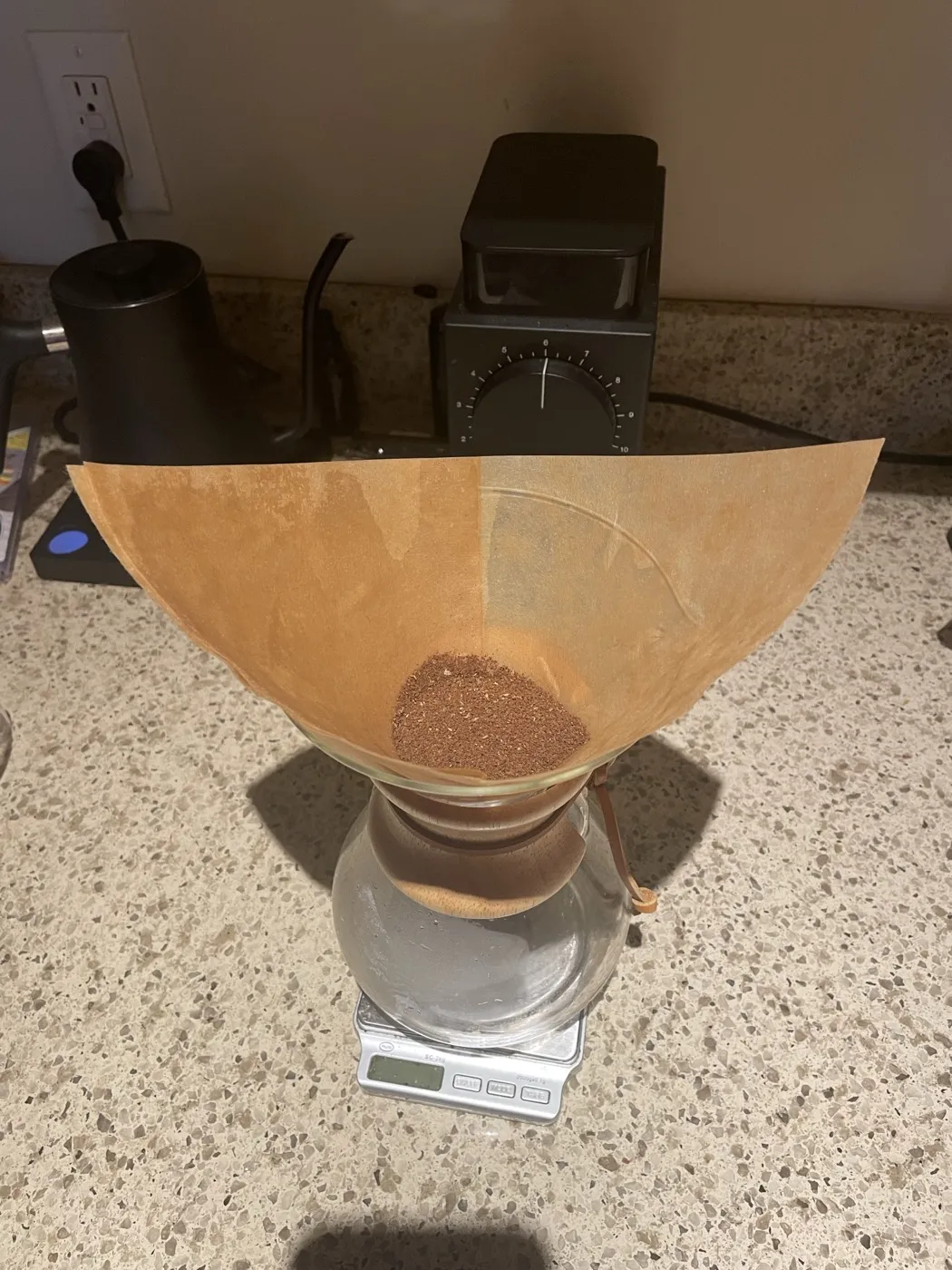
| Variable | Chemex | V60 | Kalita Wave |
|---|---|---|---|
| Coffee | 30 g | 16 g | 16 g |
| Water | 500 g | 260 g | 260 g |
| Ratio | 1:16.7 | 1:16.25 | 1:16.25 |
| Grind | Medium-coarse | Medium-fine | Medium |
| Water temp | 96 to 100°C for light roast | 94 to 100°C | 94 to 100°C |
For the Chemex, the Hoffmann Chemex recipe is a good starting point. Brew each one, then rate the same fields across all three:
- Clarity
- Sweetness
- Acidity
- Body
- Aroma
- Aftertaste
- Drawdown time
- Would I brew this again?
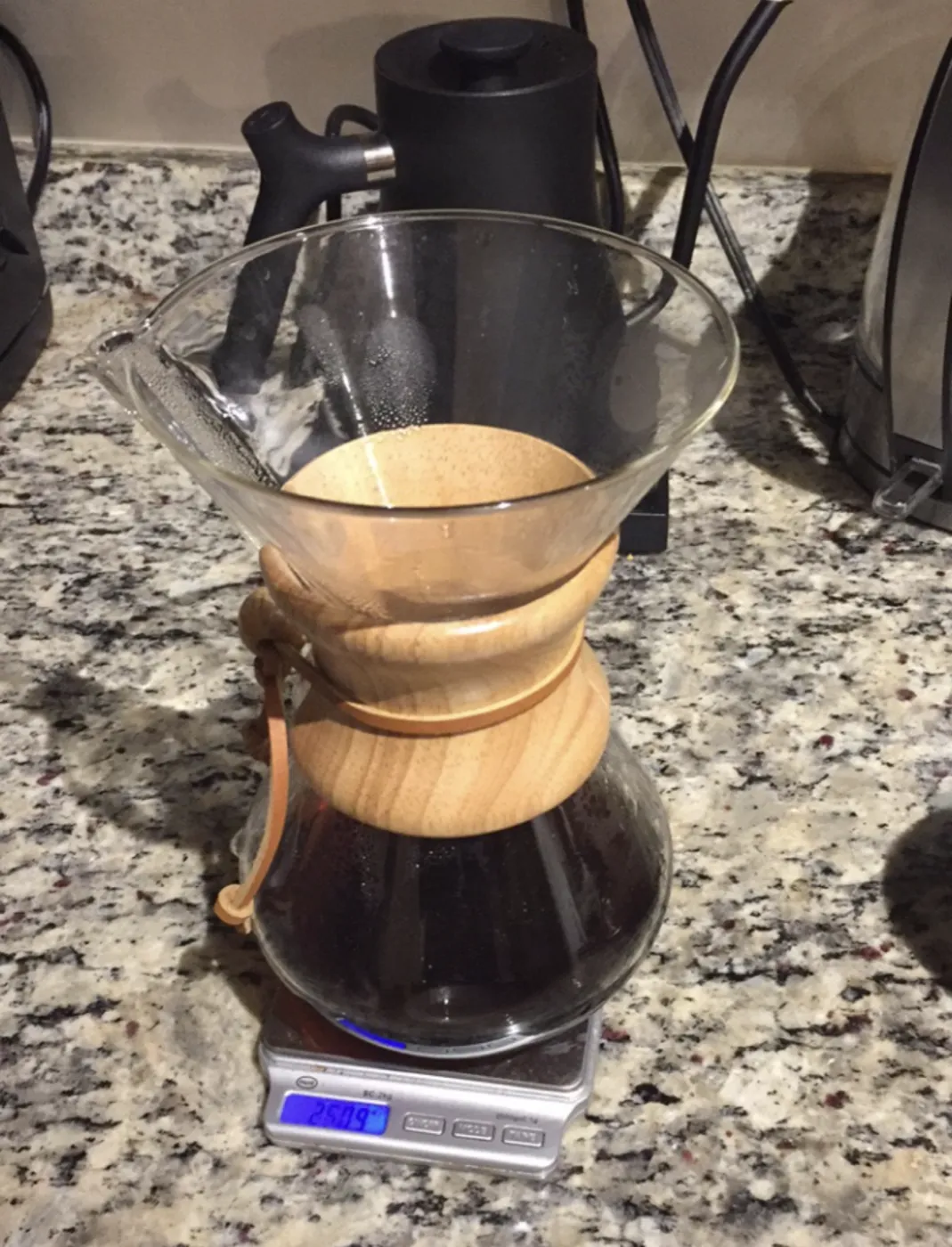
After a few coffees you will know whether you reach for the clean, bright Chemex cup or the fuller, more expressive one from a cone like the V60. There is no universal winner, only the one you keep choosing.
Who should reach for a Chemex
Keep or buy a Chemex if you brew for two to four people, like a clean and bright cup, value the design and the ritual, or prefer coffee without heavy body. It rewards washed, delicate coffees and looks good doing it.
Look elsewhere if you mostly brew a single cup each morning, or if you want maximum body, sweetness, and vivid expression from expensive light roasts. For those goals a V60, Kalita, or Origami is usually the better first reach. Our best home brewers guide lays out the options.
Track it in BeanBench
The Chemex is sensitive to grind, pour, and filter placement, so logging what you do is how you make it repeatable. In BeanBench you can record the brewer, dose, ratio, grind setting, water temperature, and drawdown, then rate clarity, body, sweetness, and balance. Run the three-brewer experiment above and the notes will tell you which cup you actually prefer. From here, dial in with grind size and water temperature, or start from the Chemex recipe.
Frequently asked questions
Does the Chemex make weaker coffee?
It often tastes lighter and cleaner, but that is about body and clarity rather than strength. The thick bonded filter removes more oils and fine particles, which lowers body. You can still hit a normal brew strength by using a slightly finer grind, a larger dose, and hotter water.
Chemex or V60, which should I get?
Pick a Chemex if you usually brew for two to four people and like a clean, low-sediment cup that you can serve from the same vessel. Pick a V60 for single cups, more body, and more control over how each brew turns out. Many people own both.
What grind size should I use for a Chemex?
Start medium-coarse, a little coarser than a V60. The thick filter slows drawdown, so too fine a grind can stall the bed and over-extract. If the cup tastes thin or sour, grind finer in small steps. See grind size.
Why is my Chemex slow or stalling?
Usually too fine a grind, too many fines, or the filter sealing against the glass and trapping air. Grind a touch coarser, make sure the triple-fold side of the filter sits over the spout to leave an air channel, and pour more gently to keep fines from clogging the bed.
Can you brew a single cup in a Chemex?
You can, but it is not where the Chemex is best. The large glass loses heat and the wide bed is hard to keep even at small doses. For one cup, a V60, Kalita, or AeroPress is easier. Save the Chemex for larger batches.
Why are Chemex filters so thick, and can I use other filters?
Chemex says its bonded filters are 20 to 30 percent heavier than many competitors, which is what gives the clean, low-sediment cup. Use genuine Chemex filters or a close equivalent. A too-thin filter changes the flow and the flavor the brewer is designed for.