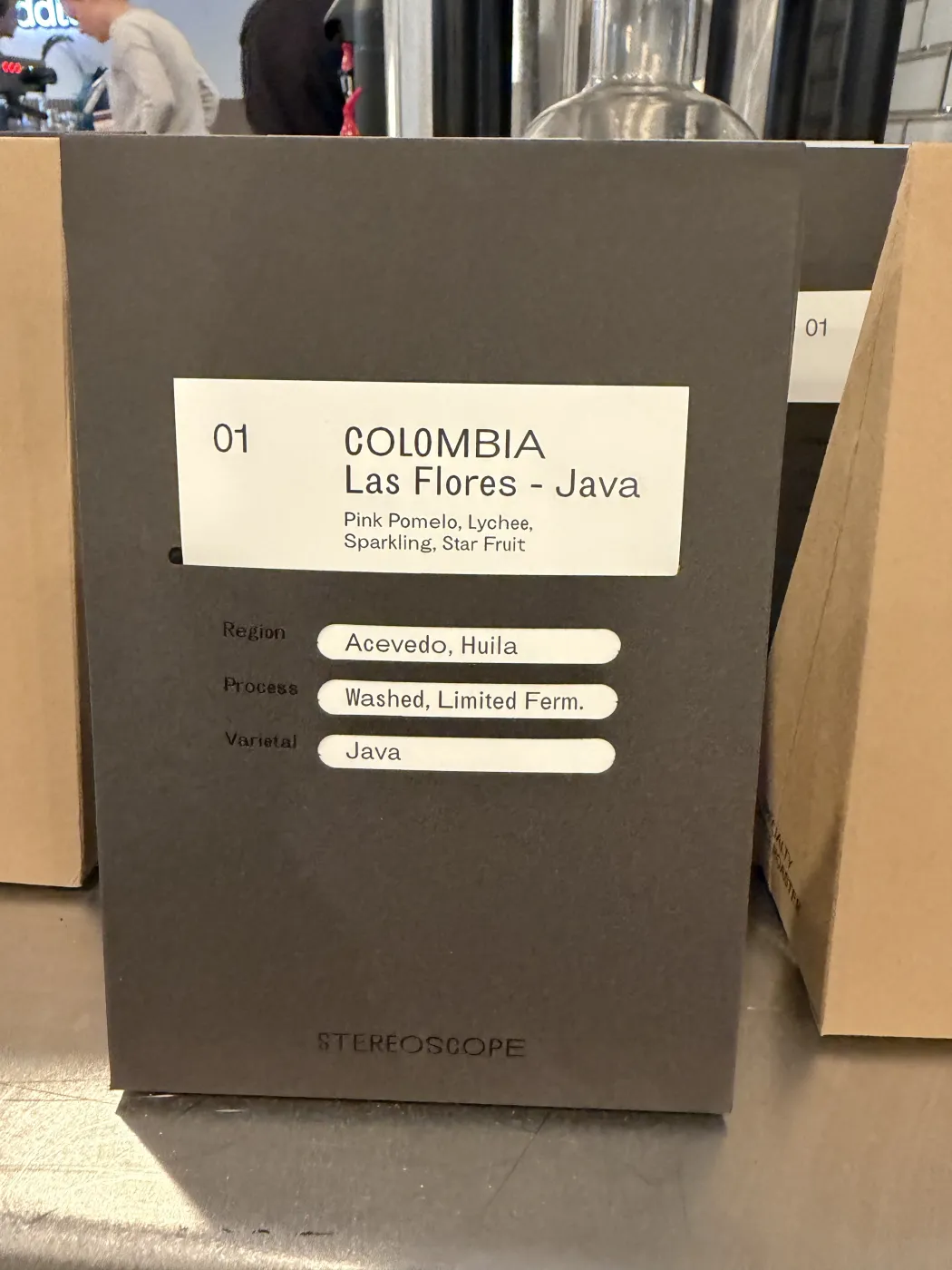
A washed Java from Finca Las Flores in Acevedo, Huila, roasted by Stereoscope and poured at Medio Cafe in Friday Harbor. The lychee was distinct enough to pick out without hunting for it.
In the cup
Tasting notes on a card are a promise the cup does not always keep. This one did, and quickly. The lychee came up first and clearly, not as a fruit-adjacent impression I had to talk myself into but as lychee. Behind it the pomelo read more as bitter citrus pith than as sweet grapefruit, which kept the whole thing from tipping into candy. The sparkling on the card is doing real work too. The acidity has a prickle to it that reads closer to carbonation than to lemon.
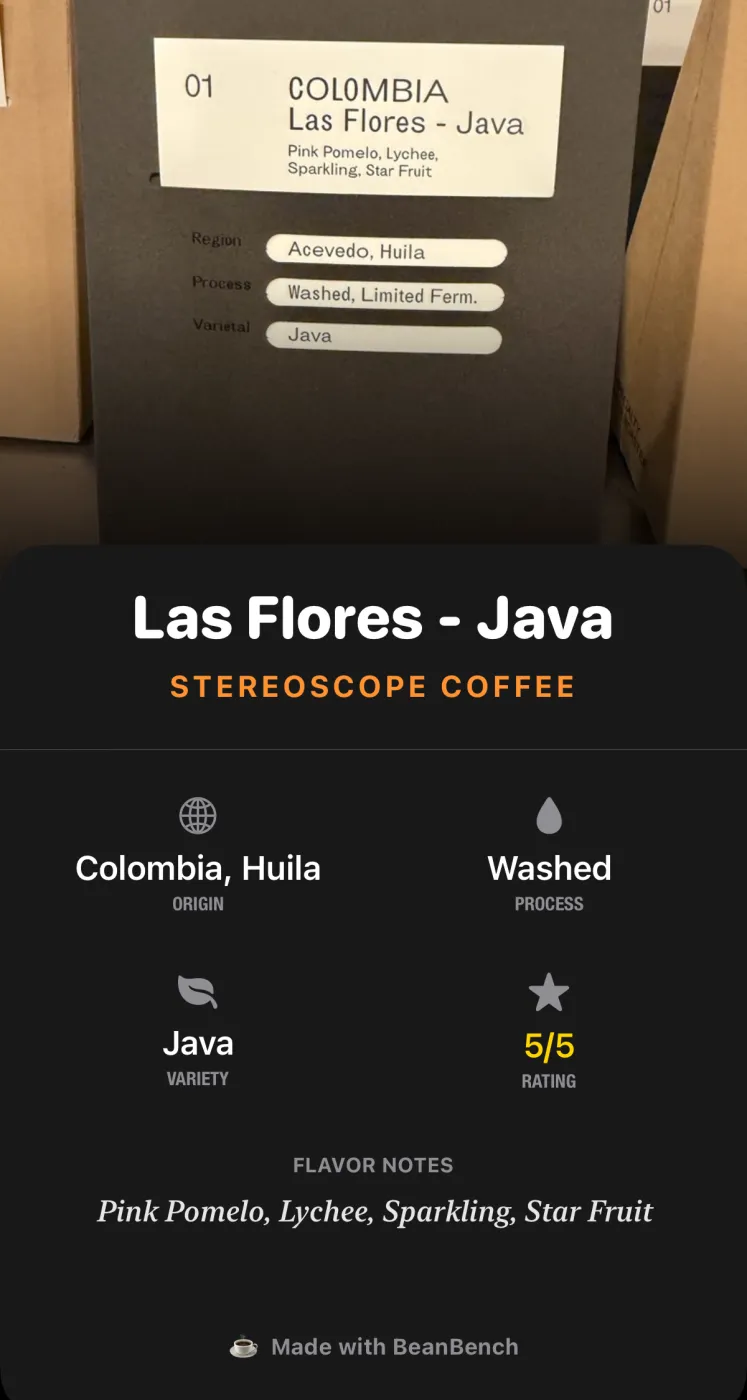
It was also clean. Coffees fermented for effect often arrive loud and slightly blurry, one big fruit note smeared over everything. This kept its edges. I logged it five stars and would order it again.
The coffee
Finca Las Flores sits in Acevedo, in the south of Colombia’s Huila department. Edilberto Vergara and Nubia Ayure founded it in 1990, and their sons Diego and Jhoan Vergara run it now. Jhoan’s name travels with this coffee: several roasters sell Las Flores lots under it, which tells you the processing is the draw. Stereoscope lists the farm at 1,700 to 1,900 metres and roasts this one light.
Stereoscope is a Southern California roaster, founded in 2013, and they sell the same coffee at 36 dollars for a 10 ounce bag. Worth knowing if you want to chase it: what Medio was pouring is a current lot, not something left over.
What Java actually is
Java is the most interesting thing on the card, and where it comes from was misunderstood for most of a century. It looks like Typica and was long assumed to be a Typica selection. World Coffee Research settled it with genetic fingerprinting: Java descends from an Ethiopian landrace population called Abyssinia. It reached Indonesia in 1928, went on to Cameroon where a breeder kept it for its partial tolerance to coffee berry disease, and only arrived in the Americas in 1991.
That history matters for the cup. WCR rates its quality potential at high altitude as very good, and it is not one of Colombia’s traditional plantings, so a Colombian Java is a deliberate planting rather than an inherited one. If you want the wider map of what gets planted and why, we have a guide to coffee varieties.
A washed coffee that tastes like this
Washed coffees are supposed to be the restrained ones. Pulp off, mucilage fermented away, flavor coming from the seed rather than the fruit. Lychee is not the usual reward.
The answer is on the process line. Stereoscope describes a controlled 36 to 48 hour ferment followed by a thermal shock and wash, and the card at the cafe abbreviates the same thing to “Washed, Limited Ferm.” A long, watched fermentation before washing builds fruit character the way a natural does, and the hot rinse at the end stops it on a schedule instead of letting it run. It is still a washed coffee. It has just been given more time to develop before the water takes the sugars away. More on where these categories sit in our guide to processing methods.
Where I had it
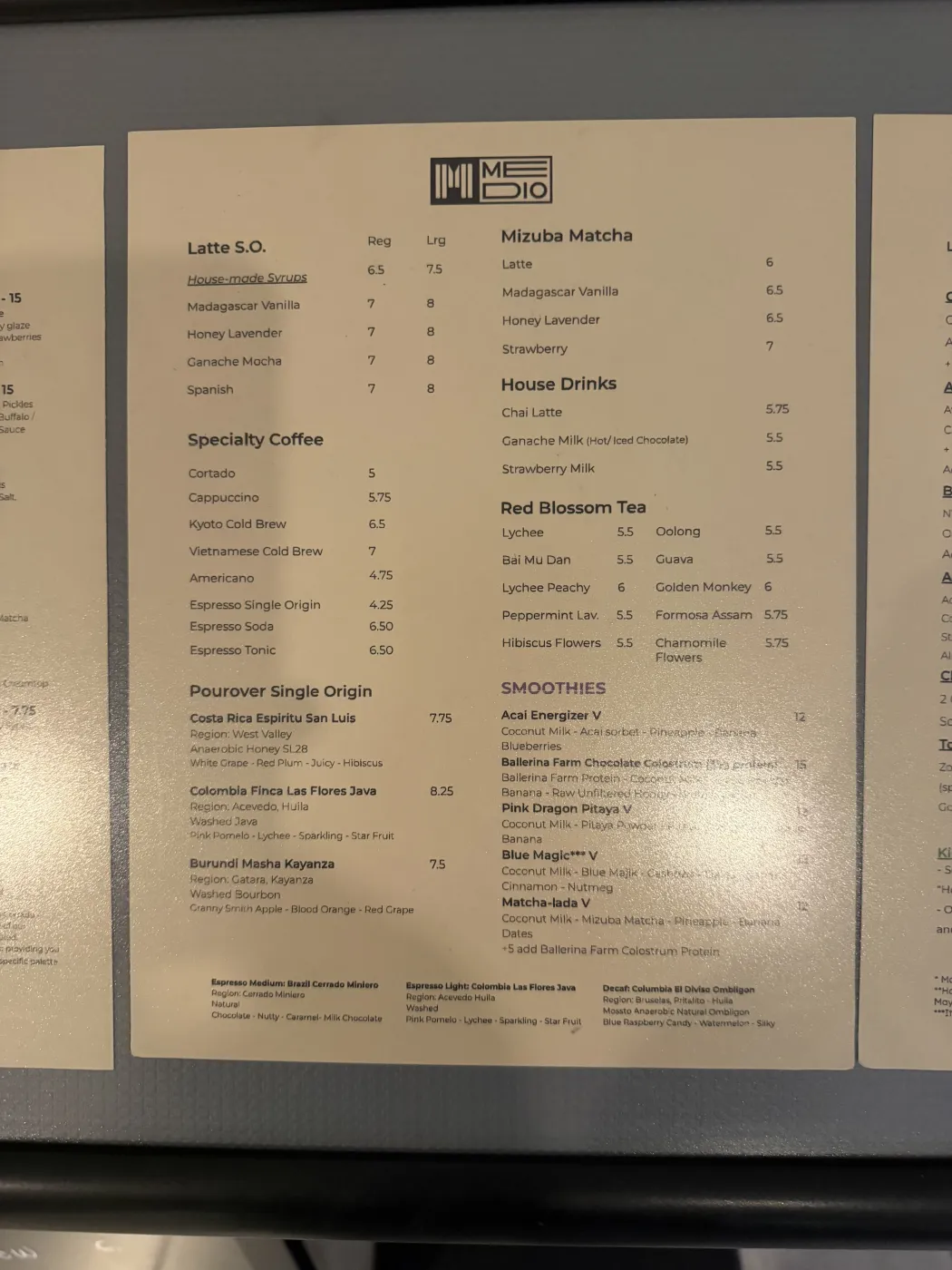
Medio Cafe is inside Friday Harbor Suites on San Juan Island, which is where we were staying, so I found it on the first morning without looking. The hand pour-over was 8.25 dollars when we were there, and this coffee was one of three single origins on the board. It also ran as their light espresso option, which is a confident thing to do with a lot this delicate.
I wrote up the cafe separately in a pour-over I did not expect in Friday Harbor, including what else is on the menu and why I had packed an AeroPress I barely touched.
Medio is on our Favorites page now, alongside the other shops and roasters I keep going back to.