Why I built BeanBench
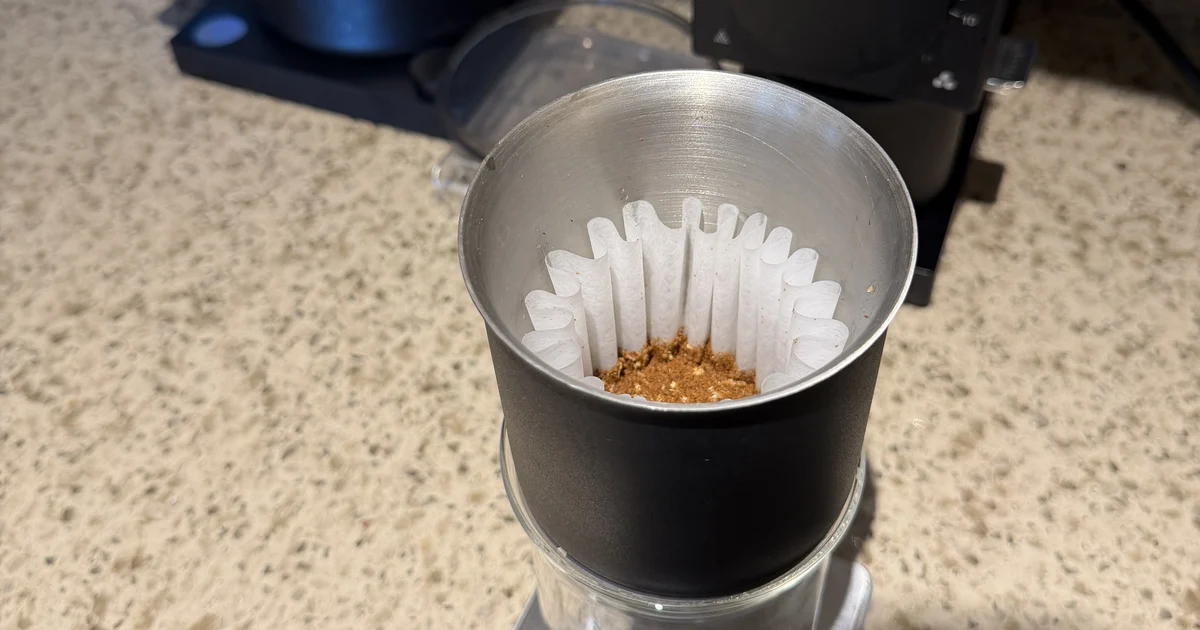
A scientist's coffee journal: how I stopped losing my best brews to spreadsheets and built an app to log pour-over, espresso, and cafe visits.
I have been into specialty coffee for years, and for most of that time I had the same small problem: I would drink something great, tell myself to remember it, and forget the details by the next morning.
Sometimes it was a pour-over at home that came out better than usual. Sometimes it was a cafe drink that sent me looking up the roaster, the origin, or the process later. Sometimes it was a bag of beans that tasted like a different coffee after another week of rest. I kept thinking I should write it down, and once in a while I did.
I tried spreadsheets. I tried Google Docs. I had recipes saved in three apps and tasting notes scattered across my phone. None of it stuck. Coffee has a lot of variables: dose, yield, ratio, grind, water temperature, brew time, roast date, resting age, origin, process, variety, and how it actually tasted. A spreadsheet can hold all of that, but it rarely feels good to use while you are mid-brew with a kettle in one hand. A blank note holds your thoughts but never builds structure. Over a few weeks, the useful details faded.
BeanBench came out of wanting something that fit the way I actually brew. It has since grown an Ask AI screen that turns a brew log into a prompt, which is the subject of can AI dial in pour-over coffee.
I am a scientist and engineer, so my first instinct with any hobby is to measure, compare, and look for patterns. Coffee rewards that. Brewing is part craft and part experiment: you change one variable, taste the result, and decide what to do next. A finer grind raises extraction but can stall the drawdown. A coffee can taste flat on day three and sweet on day ten as it rests. A recipe that sings on a washed Ethiopian can fall apart on a dense natural, because processing changes how a bean gives up its flavor. There is no single right answer, and the part I care about is building a memory for my own taste.
What BeanBench keeps track of
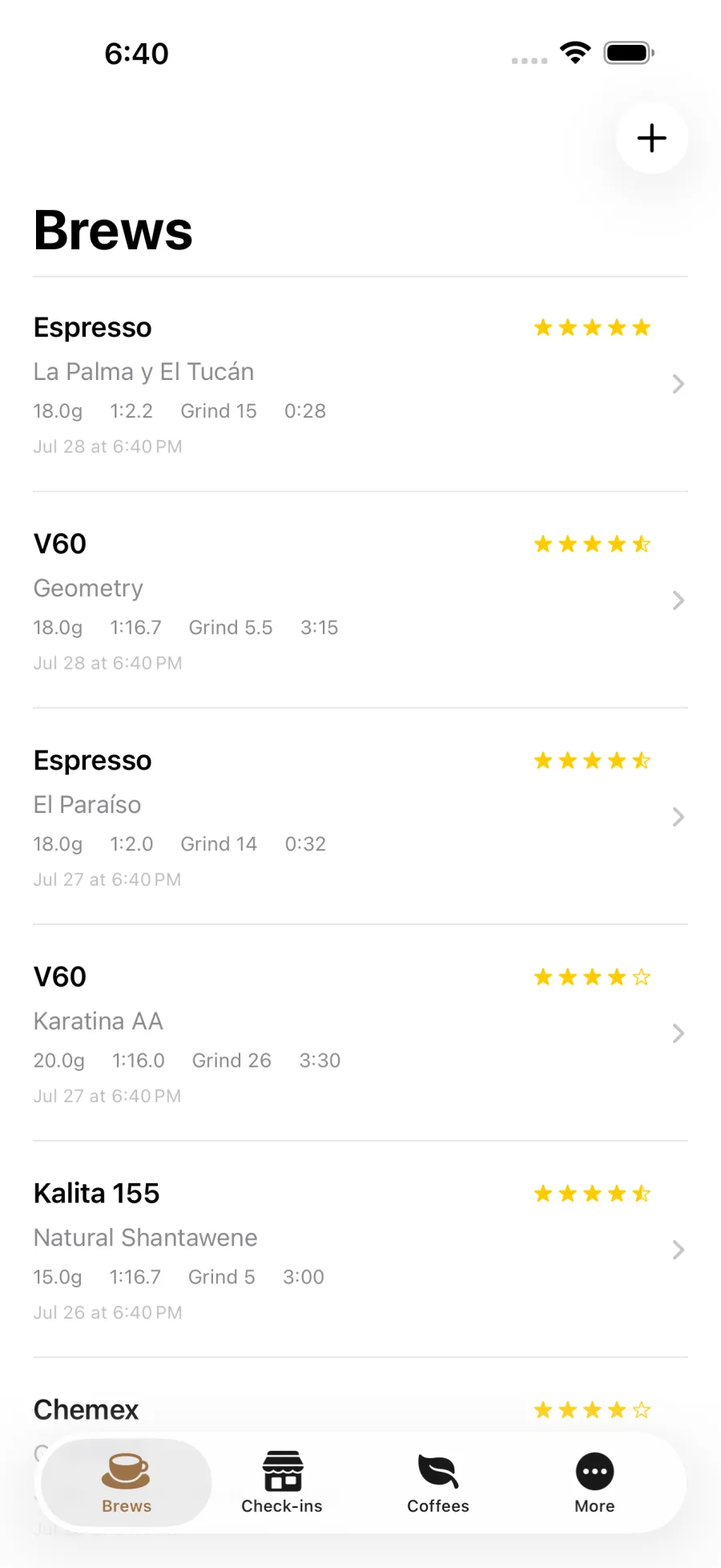
At its core, BeanBench is a specialty coffee journal. It records the facts of a brew (dose, yield, ratio, grind, temperature, time, method, and tasting notes) and the details of the coffee (roaster, origin, process, variety, roast level, roast date, and resting age). Then it lets you look back and see what you liked, what you did not, and what tends to work across different beans.
Guided brews
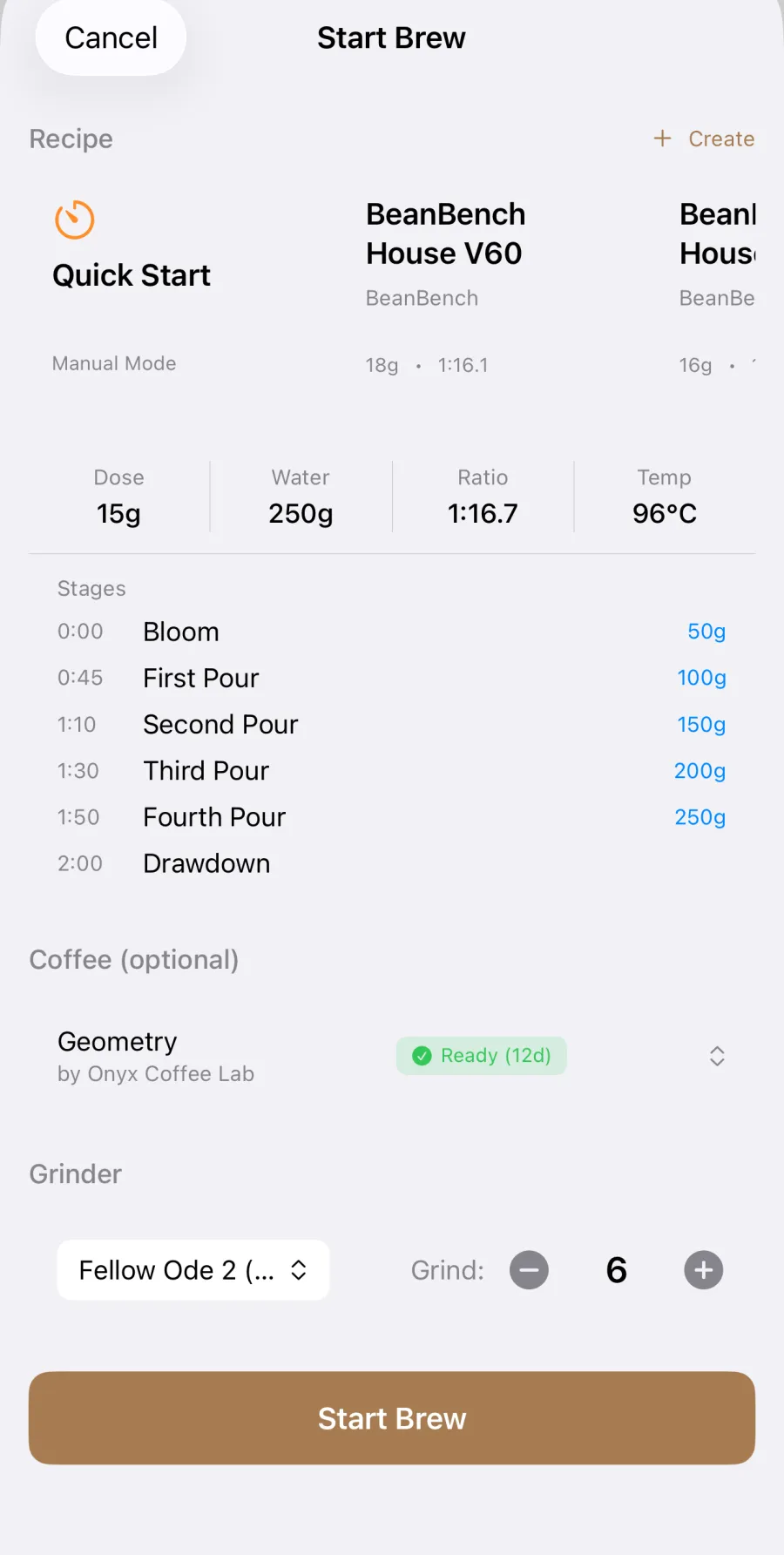
The guided brew feature came from a different annoyance. A recipe reads simply on paper: bloom for thirty seconds, pour to a weight, wait, pour again, draw down. Doing all of that with a timer, scale, kettle, grinder, and phone going at once is where it gets clumsy. So I built guided brews: program a recipe once, then follow it step by step while you brew. That makes my own favorites easy to repeat, well-known recipes like the Hoffmann V60 easy to try, and a recipe easy to share with a friend instead of texting a wall of instructions.
Cafe visits count too
Some of my favorite coffee memories come from cafes: a pour-over on a trip, a surprisingly good oat latte, a roaster I had never heard of. BeanBench keeps those too, with cafe check-ins, ratings, photos, and notes, so the next time I am nearby I remember the cortado that was worth ordering again.
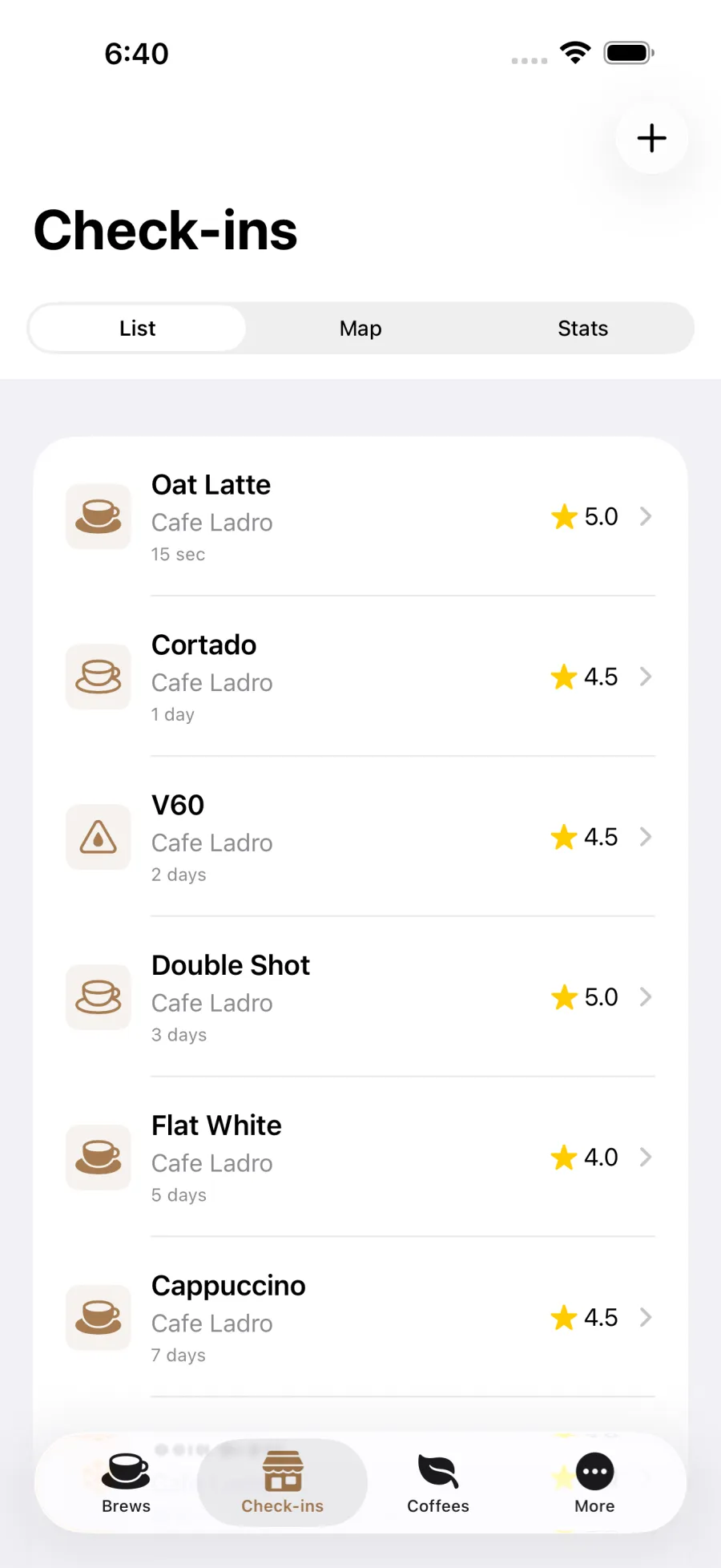
I built BeanBench for myself first, which is usually the right test for a passion project. I reach for it without thinking now: when I open a bag, when a brew comes out well, when I leave a cafe, when I taste something I want to keep. It fits a pattern in how I have been spending my time lately, which is building small, useful software around the hobbies I wanted a better tool for.
The website, beanbench.coffee, grew out of the same urge. The app is for logging and remembering, and the site is where I share what I have picked up over the years: the Learn guides, the recipes, and the weekly coffee picks. It also gives people a way to find the project before they download anything.
Your logs stay yours. BeanBench keeps your data on your device and collects nothing.
You do not need to know every detail about extraction, varieties, or water chemistry to enjoy good coffee. If you do like the details, they give you more ways to understand what you like and why. That is the idea behind BeanBench.
It is on the App Store now, and I am still improving it. If you brew pour-over, pull espresso, or just want a better way to remember what you liked, I would love your feedback. You can find the project on Instagram.
Frequently asked questions
Is BeanBench free?
Yes. BeanBench is free to download on the App Store, and you can export all of your data at any time.
Do I need an account to use BeanBench?
No. BeanBench is local-first and needs no account or sign-up — your logs live on your device, with optional iCloud sync if you want it.
What platforms does BeanBench run on?
BeanBench is an iOS app and requires iOS 17 or later.
Is my data private, and can I get it out?
Your data stays on your device and BeanBench collects nothing. You can export every field to CSV or JSON, and import your history from Beanconqueror, so there is no lock-in.