
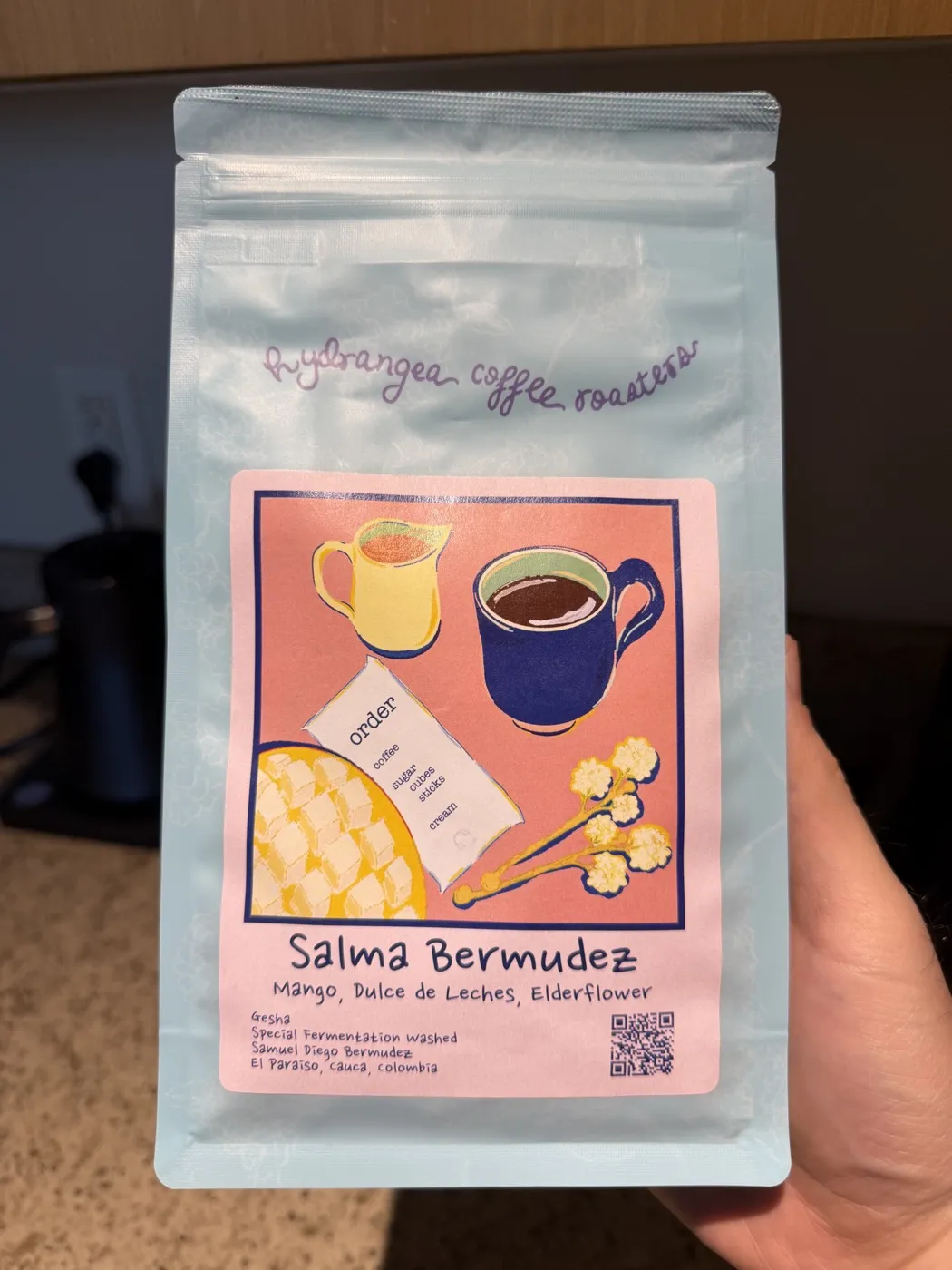
An anaerobic washed Gesha from Finca El Paraiso in Cauca, Colombia, roasted by Hydrangea Coffee Roasters. Mango from the grinder onward, with dulce de leche and elderflower, brewed at 1:16 on the Fellow Stagg dripper.
In the cup
The mango on this bag is real. It hit me in the dry fragrance the moment the beans came off the grinder, before any water touched them, and it carried straight through the cup. Behind the fruit there’s a dulce de leche sweetness and a floral edge the label calls elderflower, with a silky body and a clean citric acidity. I logged it five stars, and I was still getting all of it at 39 days off a May 24 roast. Light roasts with this much fermentation character tend to hold up well with a long rest, and this one did.
The coffee
Salma Bermudez is a Gesha grown by Diego Samuel Bermúdez at Finca El Paraíso in Piendamó, Cauca, Colombia, at 1,930 meters. Bermúdez is one of the best-known fermentation innovators in Colombia; he founded a research arm called INDESTEC in 2015 to put his processing experiments on a controlled, repeatable footing. He names lots after his family, and Salma is his middle daughter. Hydrangea has carried sibling lots named for Luna and Letty from the same farm.
Hydrangea Coffee Roasters is a Berkeley, CA roaster focused on light, fruit-forward, process-focused coffee, and this lot is squarely in that lane. They’re already on our Favorites page. This release is sold out on their site, and I’m writing it up anyway: the El Paraíso family lots rotate through their lineup, and any of them is worth grabbing when one appears.
How it’s processed
Hydrangea describes the process as a special fermentation washed: overripe cherries go through a 72-hour submerged anaerobic fermentation with a selected yeast inoculation, then dry in a dehumidifier system at low temperature to protect the aromatics. That drying step matches the closed-circuit condensation setup El Paraíso is known for, which brings coffee to target moisture without the heat swings of open-air patios. The result reads as fermentation-forward tropical fruit on a clean, washed-style base, without the boozy funk that heavy anaerobic lots can pick up.
How I brewed it
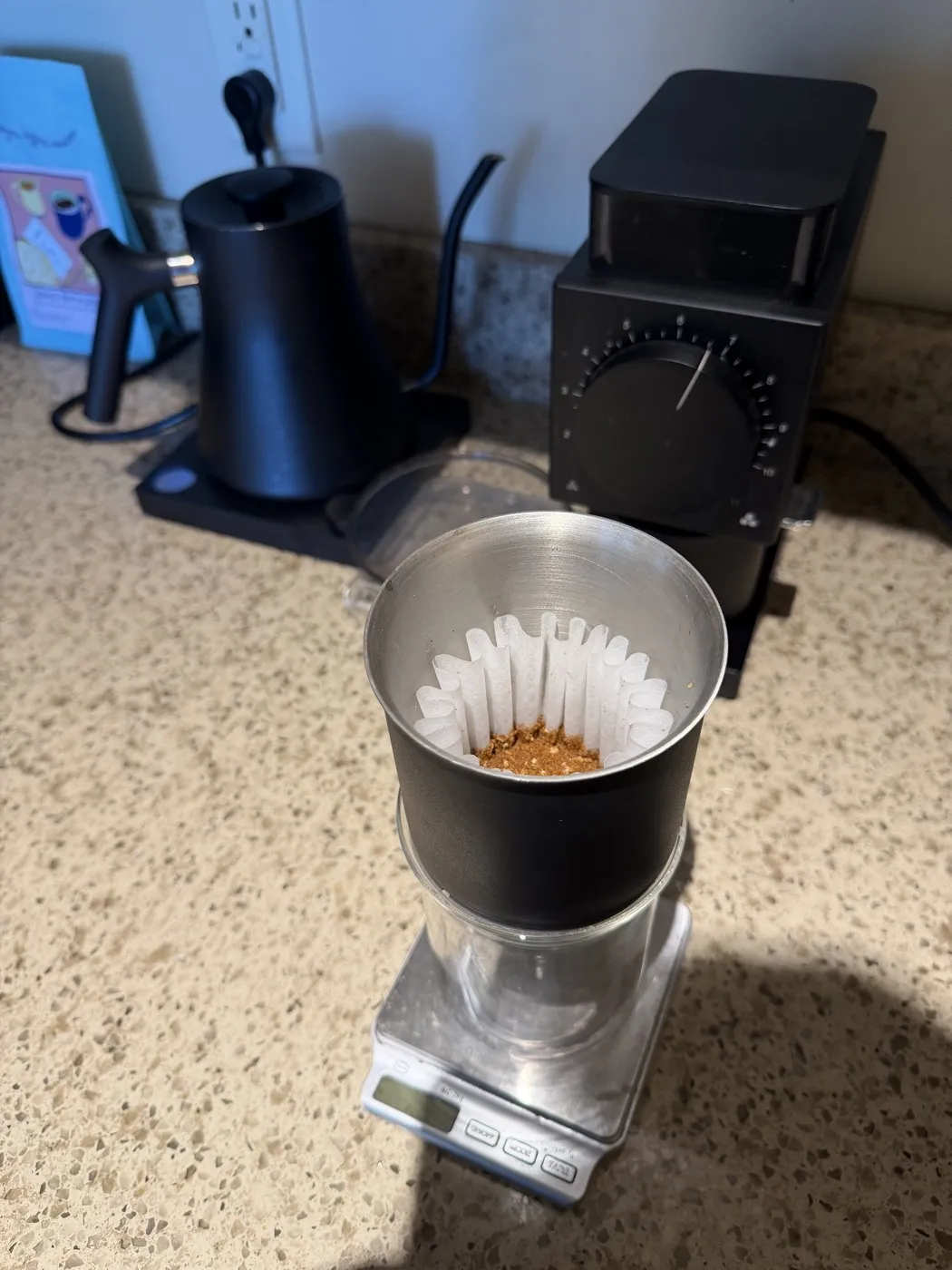
My best cups came from the Fellow Stagg pour-over dripper: 16 g of coffee to 256 g of water (1:16), 96 °C, grind 6.8 on the Fellow Ode Gen 2, finishing at 2:35 with a 1:00 drawdown. I also ran it through a Kalita Wave 155 and a Hario V60. Every brewer made a good cup, but the Stagg brews were the ones where the mango, the sweetness, and the florals all showed up at full volume.
About Gesha
Gesha traces back to wild coffee collected in the Gori Gesha forest of southwestern Ethiopia in the 1930s. It reached Panama by way of Costa Rica’s CATIE research station and became famous in 2004, when Hacienda La Esmeralda’s Geisha won Best of Panama at record auction prices. Colombian farms like El Paraíso now grow it too, and pairing the variety’s florals with controlled fermentation is exactly what this lot is about.
Hydrangea and the rest of the roasters, beans, and shops I keep coming back to are on our Favorites page.