Five Washed Coffees That Tasted Nothing Alike
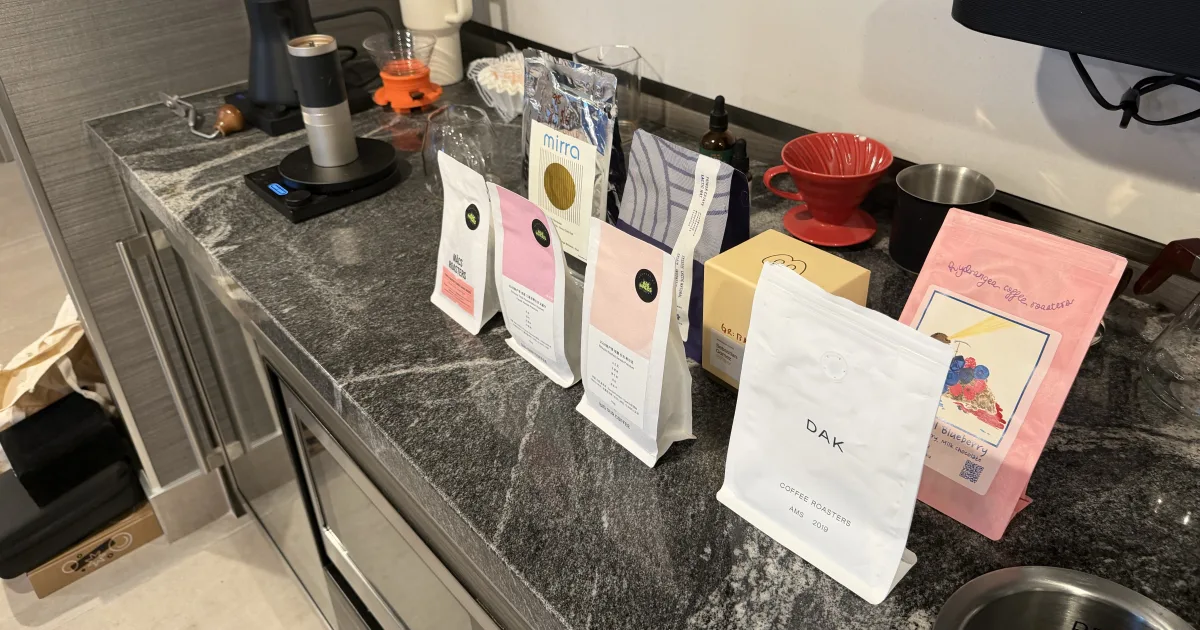
Five coffees from five countries at one Seattle cupping, all of them washed, from a delicate Ecuadorian Sidra to a blueberry co-ferment.
Last weekend I spent a morning brewing coffee with someone I had met once, at a tasting, a few months earlier. We made pour-overs, set up a cupping, and traded bags on the way out. Five coffees went through the grinder before noon, roasted in five different countries.
It was only later, logging them, that I noticed every one of those five bags said washed.
How we ended up in the same kitchen
I met Max at an Airworks tasting at Homage in Ballard. Airworks is a Seattle subscription that Jacob Cunningham started in 2024, and what it does is import light roasts from small international roasters, most of which never ship to the US on their own (Airworks). Two of the bags that ended up on my counter that morning carry a “sourced by Airworks” sticker on the front.
Homage is at 5000 20th Ave NW, multi-roaster, and I buy beans and drink pour-overs there often. I have written about that room before. Standing around a tasting table is a low-stakes way to meet people who are into the same thing you are, which is roughly the whole point of this post.
What was on the counter
Eight bags came out and we opened seven. The eighth was a second Big Sur that stayed sealed.
| Roaster | Based in | Coffee | Process on the bag |
|---|---|---|---|
| Mirra | Kingston, New York | Servio Gonzalez, Finca Clara Luz, Loja, Ecuador | Washed |
| MĀCS Roasters | Anyang, South Korea | Worka Sakaro, Gedeb, Ethiopia | Washed |
| DAK | Amsterdam | Lemon Squeeze, Arbegona, Sidama, Ethiopia | Washed |
| Big Sur | Shanghai | Faysel Abdosh, Hambela Guji, Ethiopia | Triple fermentation washed |
| Hydrangea | Berkeley | Mora Azul Blueberry, Finca Monteblanco, Colombia | Blueberry co-fermented washed |
| Sought x Found | Calgary | Frinsa Estate, West Java, Indonesia | Lactic natural |
| Monogram | Calgary | Sebastian Gomez, La Divisa, Quindío, Colombia | Carbonic maceration |
Max brought the two we poured first; the three we cupped came off my own shelf, so I knew them going in. The top five got brewed. The bottom two went home in my bag.
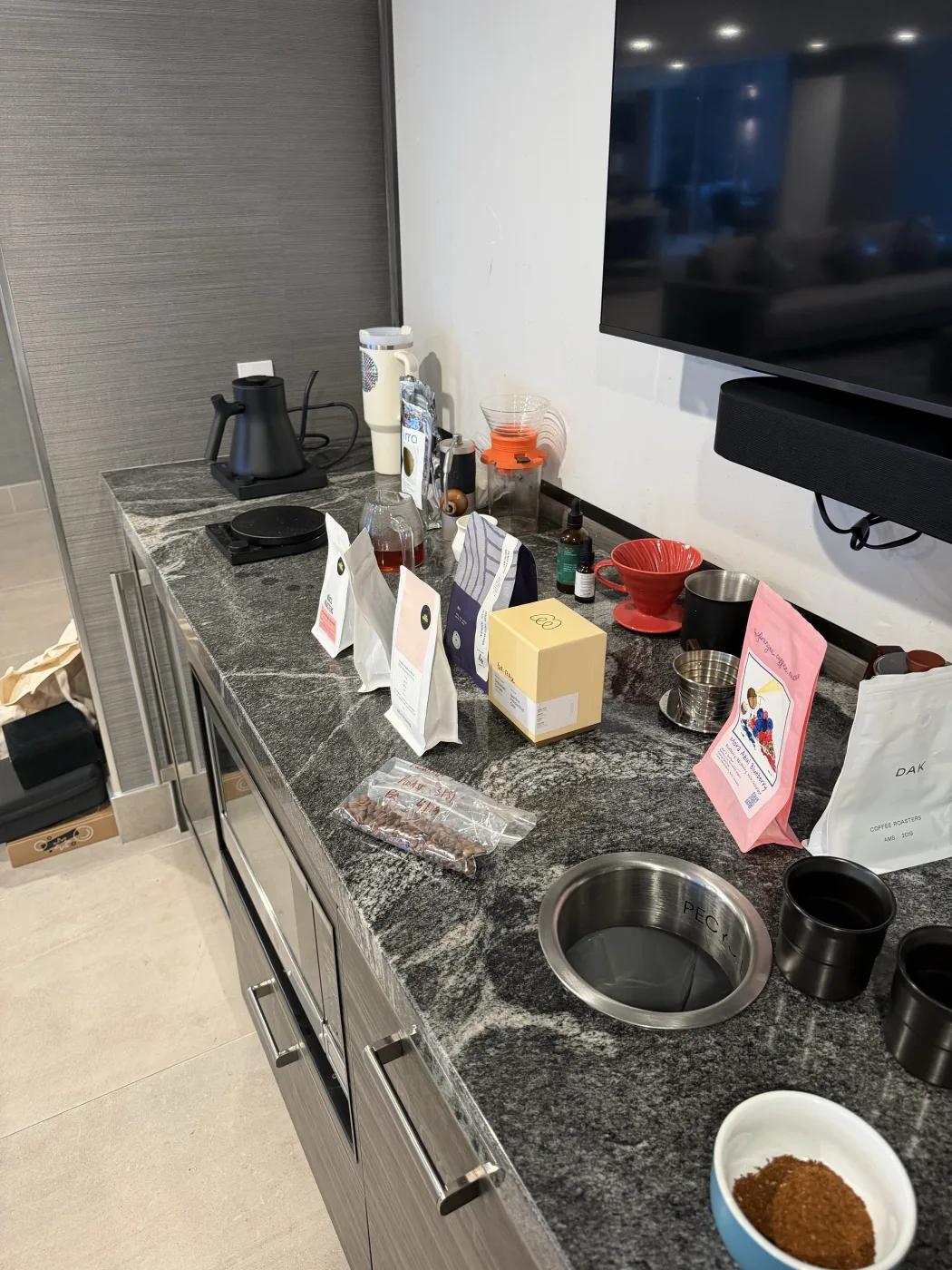
Five countries of roasting on about four feet of counter.
Two pour-overs to start
We opened with the Mirra. It is a washed Sidra from Servio Gonzalez at Finca Clara Luz in Loja, Ecuador, with papaya, orange blossom, and kiwi printed on the label, roasted June 24. Mirra roasts in Kingston, New York, and calls itself the American Nordic roastery, which turns out to be a fair description of the cup.
Then the MĀCS: Ethiopia Yirgacheffe, Gedeb, kebele Worka Sakaro, 1,800 to 2,200 meters, Wolisho and Dega, washed. Peach, green grape, floral. That bag was 61 days off roast and the Big Sur was 55, which sounds old until you remember these are ultra-light roasts. Heavily processed and very lightly roasted coffees hold up over a long rest in a way that a medium roast will not.
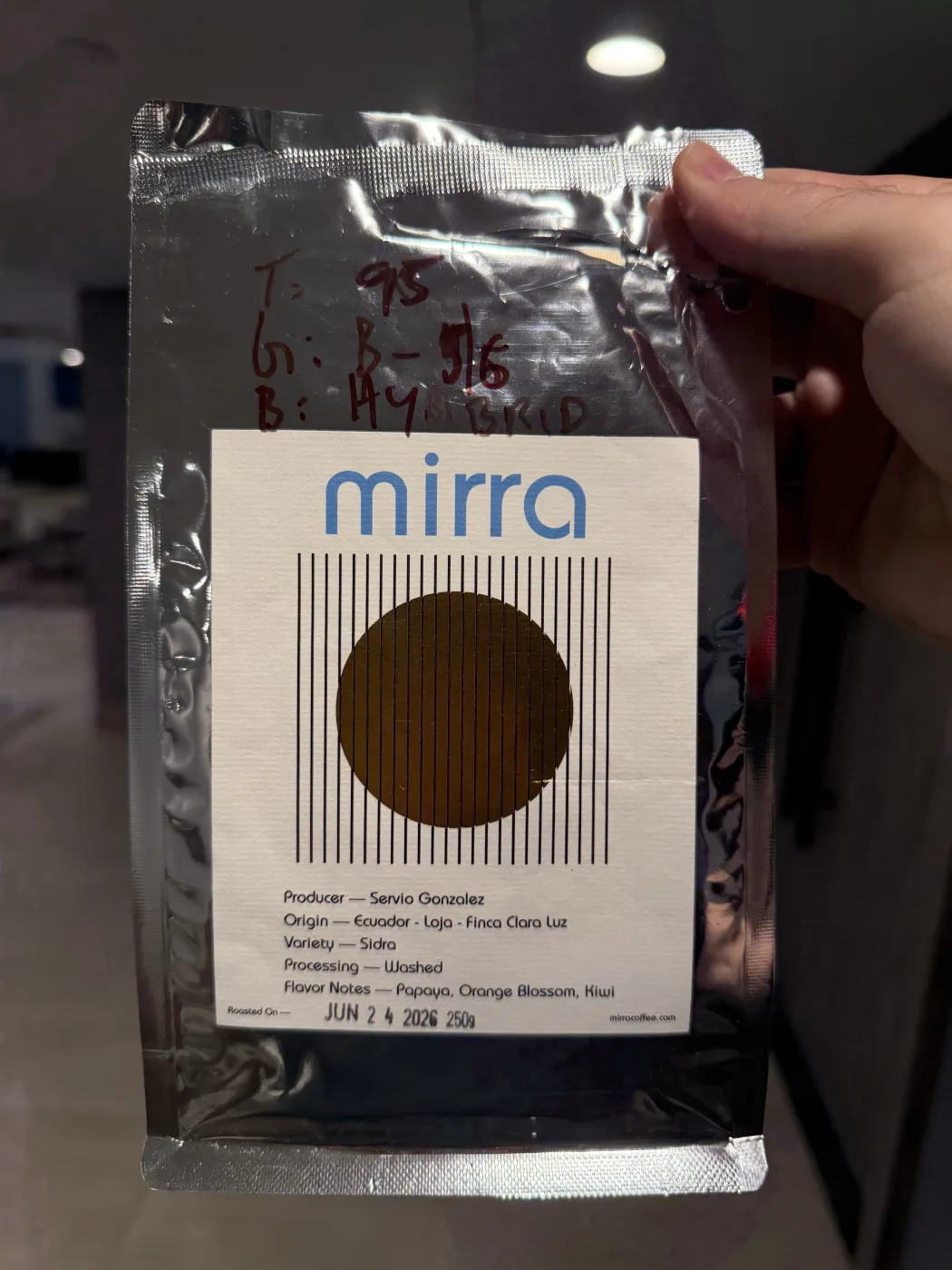
Brew notes in marker on the bag, which is the analog version of what I built BeanBench for.
Then three cups side by side
For the cupping we used the DAK, the Big Sur, and the Hydrangea. Same dose, same water, same temperature, crust broken at four minutes, tasted in rounds as the cups cooled. The home cupping guide has the full recipe and the grinder settings, so I will not repeat them here.
One thing we skipped: we did not code the cups. The bags sat on the counter beside the bowls and we both knew which was which. That has a price. The SCA reported a study in which 150 trained professionals scored the same coffee higher when it arrived with an origin story attached, and neither of us is a trained professional. Everything below is a first impression from an unblinded table.
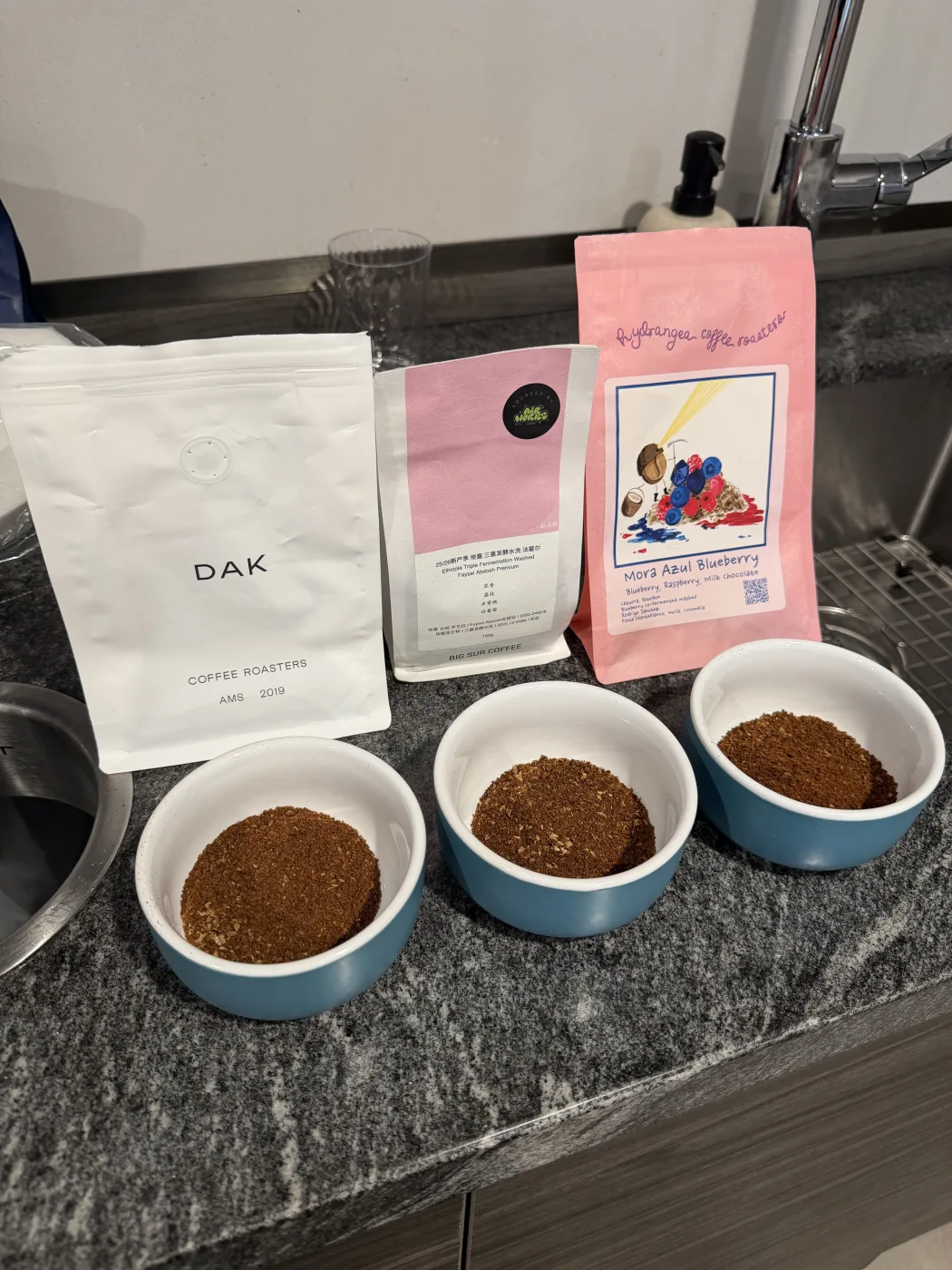
Dry grounds before the pour. You can smell the Hydrangea from the far end of the counter.
The Hydrangea was the loudest cup by a wide margin. Its Mora Azul Blueberry announces itself in the dry grounds before water gets anywhere near it. The DAK Lemon Squeeze sat at the other end, clean and citric. The Big Sur landed in between, floral and stone-fruity, with something denser underneath it than the DAK had.
That order is what you would predict if you sorted the table by how processed each coffee sounded. Which is where the labels stopped helping.
Every bag said washed
All three cupping coffees said washed. So did both pour-overs. The word covered a delicate Ecuadorian Sidra and a coffee you can smell through a sealed bag.
Washed specifies one thing: the fruit and mucilage came off the seed before it dried. It says nothing about how long the seeds sat in a tank first, what was in the tank with them, whether oxygen was kept out, or whether anyone added a culture. All of that happens upstream of the washing, and all of it ends up in the cup.
Hydrangea is open about theirs. Mora Azul starts with a mother culture of Purple Caturra cherries fermented for 190 hours with sugar, molasses, and concentrated blueberry juice. The pulped cherries then spend another 150 hours in sealed tanks with that infusion before they are washed and dried. Rodrigo Sánchez Valencia runs that farm, Finca Monteblanco, above Pitalito in Huila. Big Sur’s bag says triple fermentation washed, which tells you the producer at the Faysel Abdosh station intervened three separate times and leaves the rest to your imagination, because no published standard defines what the three stages are. I went looking afterward and found the stages on another roaster’s listing of the same lot: 24 hours of sealed whole cherry, 12 hours of dry fermentation, 12 more in cold water, each stage stopped on a pH reading rather than a clock.
So the framing I would have reached for, clean washed coffees on one side and louder processed ones on the other, tracks how the cups actually tasted. It tracks nothing on the labels, because the labels all said the same word. Our processing methods and fermentation guides go into what the terms are supposed to mean. Whether adding blueberry juice to a fermentation tank should still count as coffee is a live argument, and it has reached competition rules.
Max’s April setup
Max brought his April gear. April is Patrik Rolf’s roastery in Copenhagen, started in 2016, and Rolf won the 2019 Swedish Brewers Cup and took second at the world championship that year. The brewers came later. The first April Brewer took two years to design, with the Belgian company Serax, and set the pattern the range still follows: a flat bed, interior ridges holding a flat-bottom filter above a single conical drain hole, and gaps cast into the base so air can escape from the vessel underneath instead of pushing back up through the coffee (Daily Coffee News).
He also brought a special-edition ceramic April brewer that arrived in a black velvet presentation box, with a gold-plated Sibarist BOOSTER sitting in it. The BOOSTER is a stainless steel mesh disc that goes under the paper to add contact points beneath the bed, which is the same family of idea as the fast filters Sibarist is better known for. It is a lot of ceremony for a cone of paper, and I mean that as a compliment.
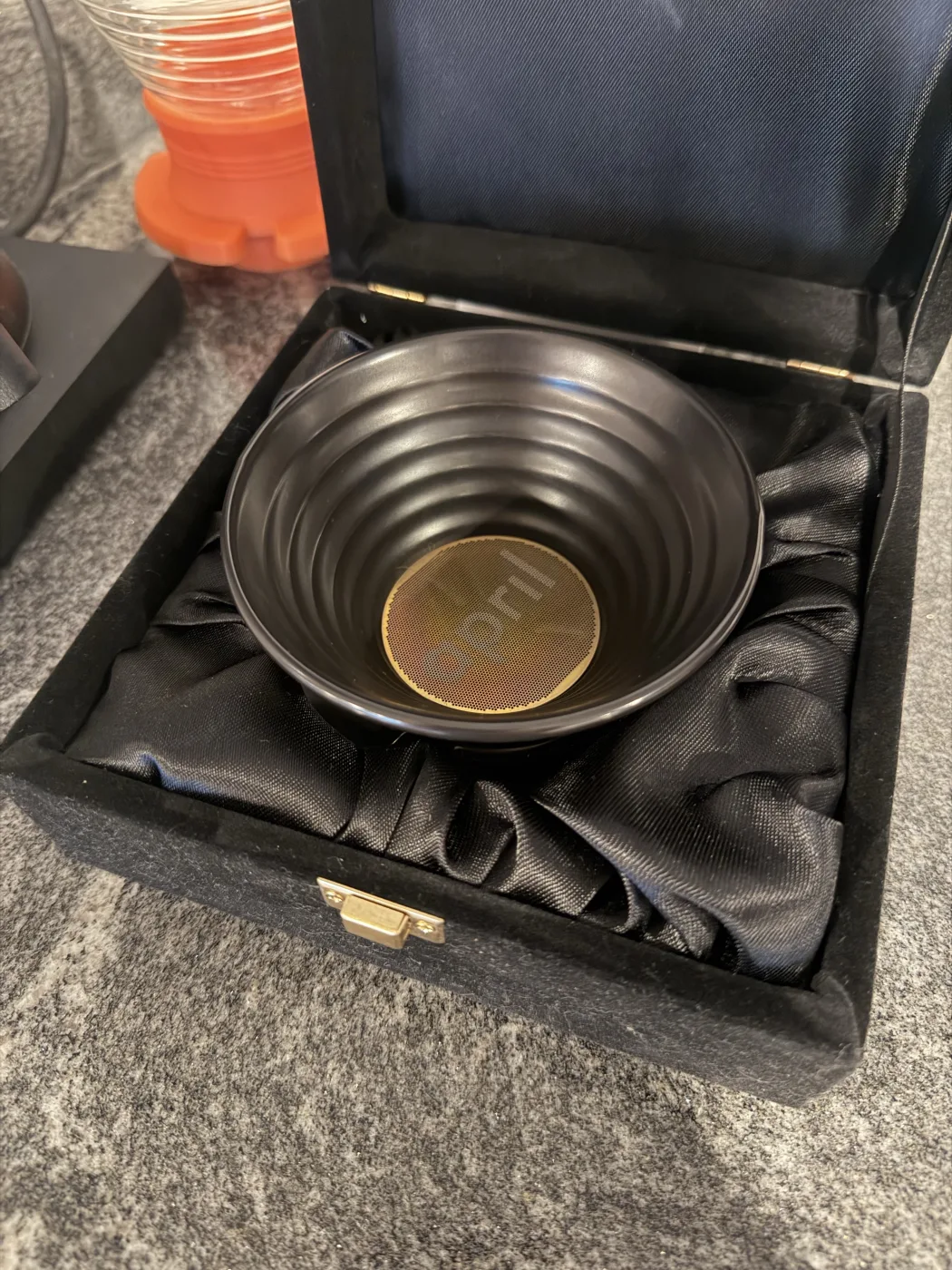
The ceramic brewer stayed in its box. The orange one did the work.
What we actually brewed on was the orange April Hybrid, which is glass, silicone, plastic, and metal, with a valve on the side that closes the bed off so you can steep by immersion and then release it. If the flat bed and the very light roasts sound like a coherent set of choices, they are. Our Nordic-style coffee guide covers where that style came from and how to brew into it.
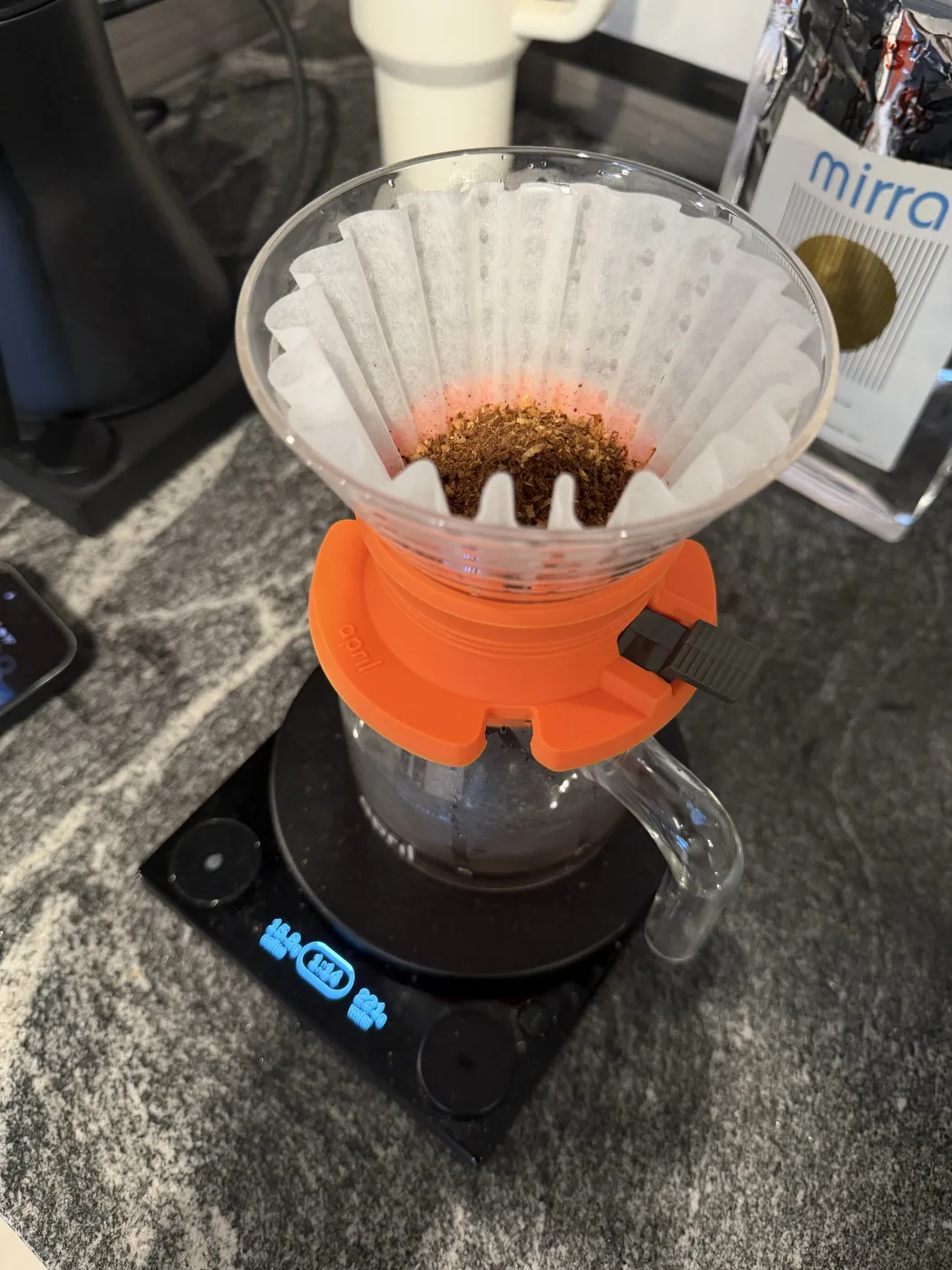
We traded beans
We finished the way these things finish, by giving each other coffee. I came home with two bags from Max, both from Calgary roasters. Sought x Found sent me off with their Frinsa Estate lot, from Wildan Mustofa’s farm in West Java, lactic natural, with pomegranate, cranberry, grapefruit, and licorice on the label. And Monogram’s Sebastian Gomez, a Gesha from La Divisa in Quindío, Colombia, given a 24-hour dry aerobic rest and then 50 hours of carbonic maceration in sealed GrainPro bags before it went to raised beds.
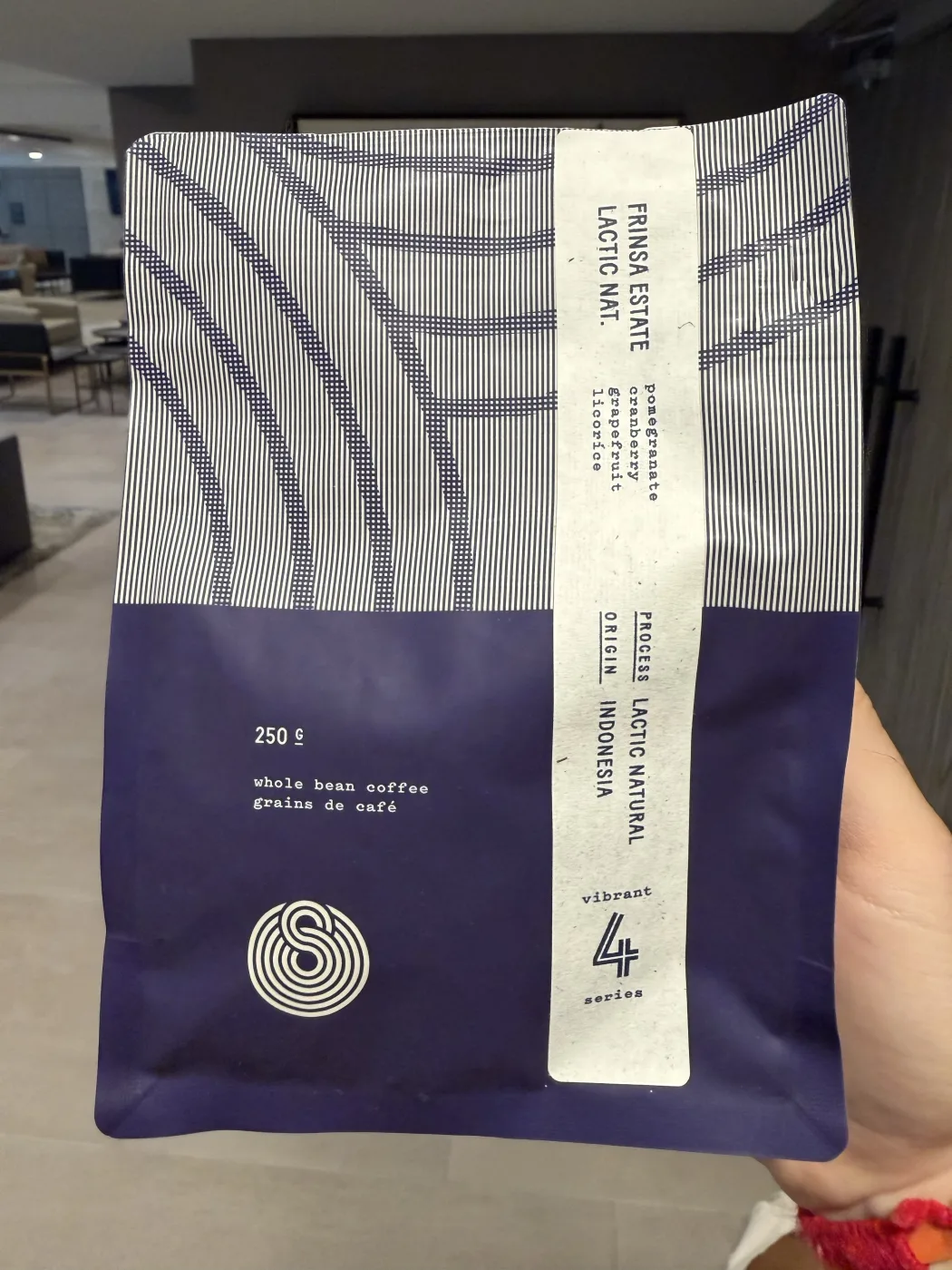
Sought x Found’s Frinsa Estate, the one lactic natural of the day.
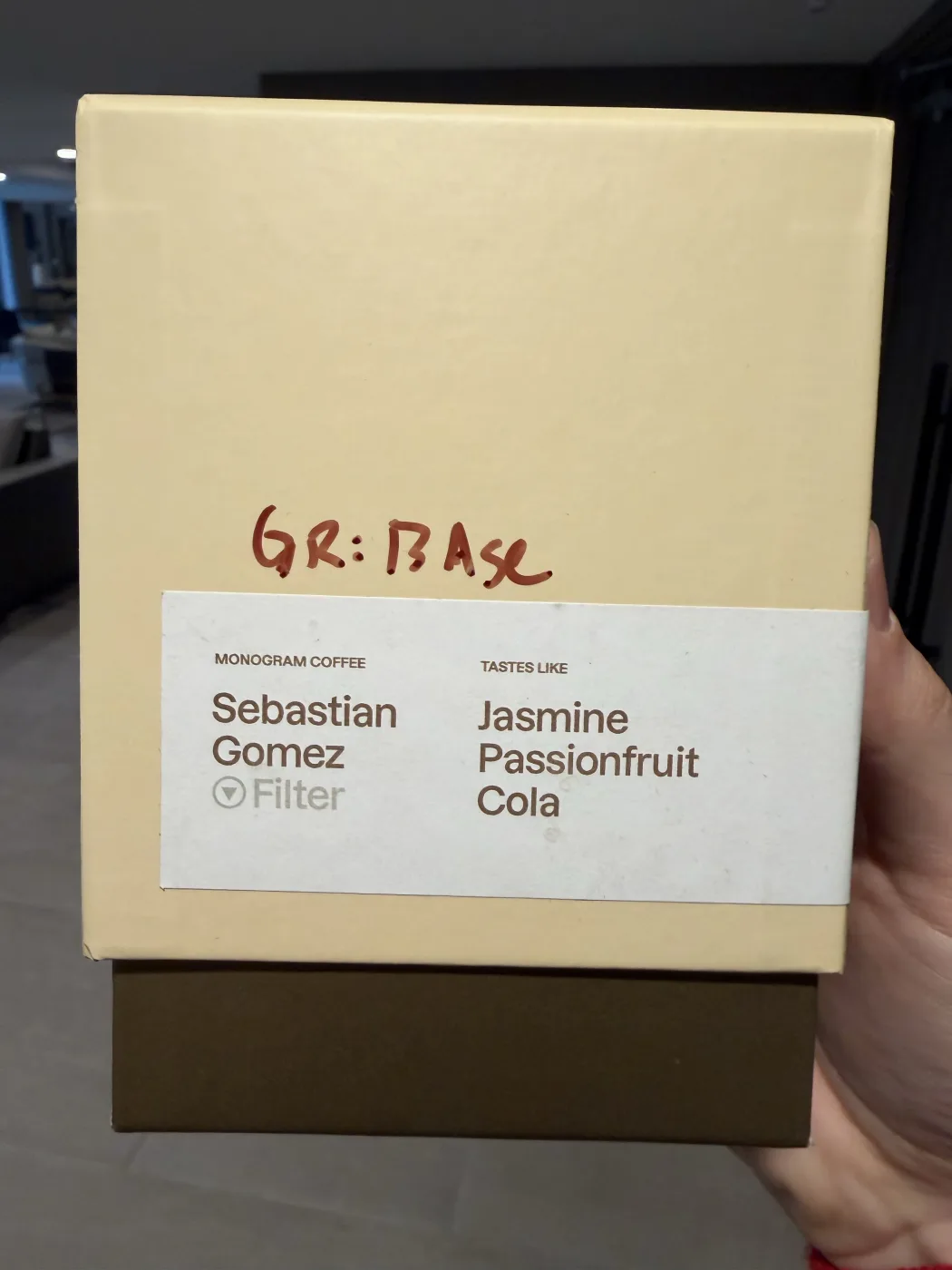
Monogram’s Sebastian Gomez, the other bag that went home with me.
Both of those are fermentation-forward processes, and neither of them made it into a cup that morning. The table stayed washed from start to finish and the trade did not.
What a second palate is for
Two people is not a sensory panel. Nothing was blind, we tasted what we already owned, and we talked while we did it, which is several of the ways a tasting can go wrong at once.
The value was calibration, in a looser sense than the word implies. We tasted the same cups at the same table and talked as they cooled, and hearing someone else’s read of a coffee while your own is still forming is something a notebook cannot give you. You can spend years reading about extraction and fermentation and still not know whether the words in your notes point at the same things they point at in anyone else’s. A shared table starts to answer that. And the second thing a second person brings is a second shelf: the two pour-overs Max carried in were the most interesting coffees of the morning for me, a Mirra lot I had not tried from a roaster I already knew, and my first coffee from MĀCS.
Track it in BeanBench
Five coffees in one morning is more than I can hold. By the time I sat down that evening the Mirra and the MĀCS had started to blur together, and the only reason I can tell you the Big Sur was 55 days off roast and the MĀCS was 61 is that I scanned both bags before we started grinding.
In BeanBench you can log each coffee with its roaster, origin, variety, process, roast date, and your own notes, then put a session’s worth of them side by side later and see what you actually thought. From here, read the home cupping guide for the protocol we used, processing methods for what the words on the bag are supposed to mean, or coffee resting for why a 61-day-old bag of light roast was still one of the best cups on the table.
Frequently asked questions
What does the word washed actually tell you about a coffee?
Only that the fruit and mucilage came off the seed before drying. It does not tell you how long the seeds sat in a tank first, what was in the tank with them, whether oxygen was kept out, or whether the producer added a culture. Two bags can both say washed and taste nothing alike.
What is a blueberry co-fermented washed coffee?
A washed coffee whose fermentation tank was deliberately seeded with blueberry. Hydrangea's Mora Azul from Finca Monteblanco starts with a mother culture of Purple Caturra cherries fermented 190 hours with sugar, molasses, and concentrated blueberry juice, then the pulped cherries spend another 150 hours in sealed tanks with that infusion before drying.
What is triple fermentation washed?
A washed process run through three separate fermentation stages rather than one. Big Sur's Faysel Abdosh lot from Hambela Guji is labeled this way. No published standard defines the stages, so the number tells you the producer intervened repeatedly without telling you how.
Do you have to cup blind?
No, but seeing the bags costs you something. The SCA reported a study in which 150 trained professionals scored the same coffee higher when it came with an origin story. Our home cupping guide covers how to code cups A through D if you want the stricter version.
What is Airworks Coffee?
A Seattle coffee subscription founded in 2024 by Jacob Cunningham that imports light roasts from small international roasters, many of which do not otherwise export to the US. It is how a Shanghai roaster's coffee ends up on a Seattle kitchen counter.
What is the April Hybrid brewer?
A flat-bed pour-over brewer from April Coffee Roasters in Copenhagen, made of glass, silicone, plastic, and metal, with a valve that lets you close the bed off and steep by immersion. It takes April's large paper filter or the April x Sibarist filter.